




Live-in care or a care home: where do you start?
Begin with the person, then look at the arrangements
You may be exploring care because everyday life has become harder, help is needed between visits or a partner is finding the nights difficult. Sometimes the question comes after a hospital stay; sometimes it develops gradually. Whatever has prompted it, choosing a setting is easier when you first understand what needs to change and what the person wants to keep.
Live-in care involves a care worker living in the person’s home, with support and rest agreed in a care plan. A care home provides accommodation and care in a shared setting; some also provide registered nursing. Both can offer meaningful support. The important question is how a particular provider would meet this person’s needs, rather than which broad label sounds most reassuring.
A move or a live-in arrangement may not be necessary yet. Scheduled home care visits, practical help or changes to the home may still be worth exploring. Conversely, repeated difficulties with meals, medication routines, getting washed or moving around may mean the current plan needs reviewing. These are reasons to seek an assessment, not proof that one setting is the answer.
In this guide, we help you compare daily life, overnight cover, costs and practical responsibilities. We also suggest questions you can take to providers and professionals. The assessment and funding routes described apply to England. For a wider introduction to starting support, see our guide to understanding and arranging home care.
Live-in care and care homes at a glance
- Start with wishes and needs: include the person’s routines, relationships and preferences.
- Compare real arrangements: providers differ in staffing, facilities, support and availability.
- Check the whole night: a live-in worker is not automatically awake and on duty around the clock.
- Look beyond the quoted fee: ask about extra care, household costs and future increases.
- Explore independent help: council assessments and relevant NHS funding routes may inform the decision.
- Keep the plan under review: a suitable choice today may need to change later.
Six questions to help you compare care options
Describe what a workable day would actually look like
A useful comparison starts with ordinary life. Write down the help needed, the times it matters and the things that make a day enjoyable. Use the same information when speaking to a live-in provider and a care home, so each is responding to the same situation.
Which routines and choices matter most?
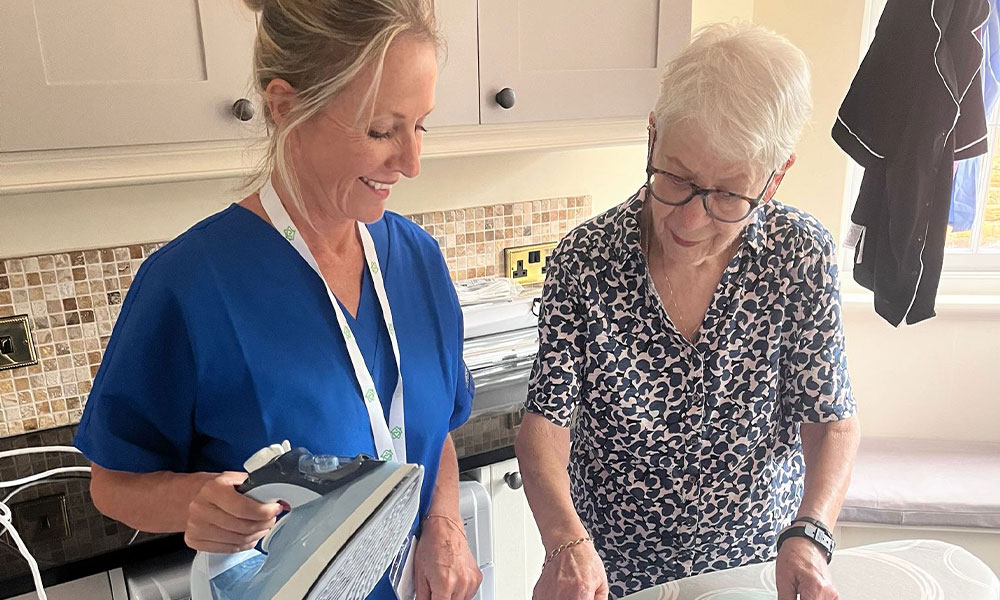
Think about what makes the person feel comfortable and in control. The aim is to understand how either arrangement would respect those preferences.
- Preferred waking, washing and mealtimes.
- Privacy, personal space and who helps with intimate care.
- Food, faith, culture and everyday choices.
Ask for practical examples of flexibility, rather than relying on a promise of personalised care.
When is help needed, including overnight?
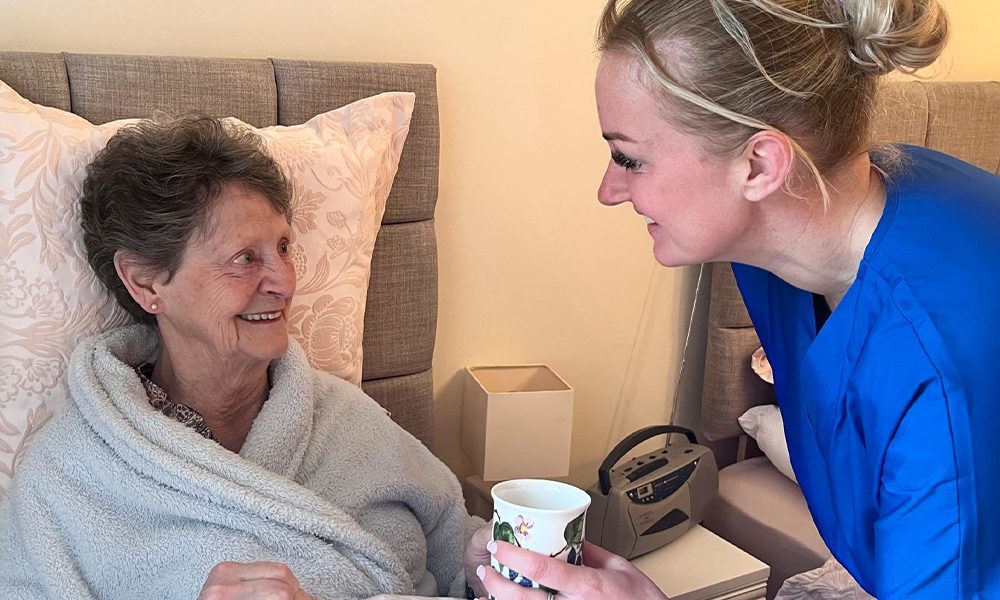
Timing can change the kind of support required. Someone needing predictable assistance twice a day has different needs from someone needing frequent, unexpected help.
- What happens between current care visits?
- How often is help needed during the night?
- Are there times when two workers are needed together?
Describe actual recent days and nights so the proposed staffing can be assessed realistically.

What skills and clinical support are needed?
A diagnosis alone does not describe someone’s care needs. Explain the practical help, communication and professional input involved in their usual routine.
- Which tasks need a nurse or other healthcare professional?
- How will staff understand communication needs?
- Who reviews changes in health, mobility or medication?
Ask the relevant professional what support is needed, then check whether each provider can deliver its part.

What would a satisfying social life look like?
Some people enjoy shared meals and activities; others prefer familiar visitors and quieter company. Neither setting automatically creates the right social life.
- Which people and activities matter most?
- Would group activities feel enjoyable or tiring?
- What help is needed to get out or keep in touch?
Ask how those preferences would become part of an ordinary week, including time alone by choice.
Can the everyday practicalities work?
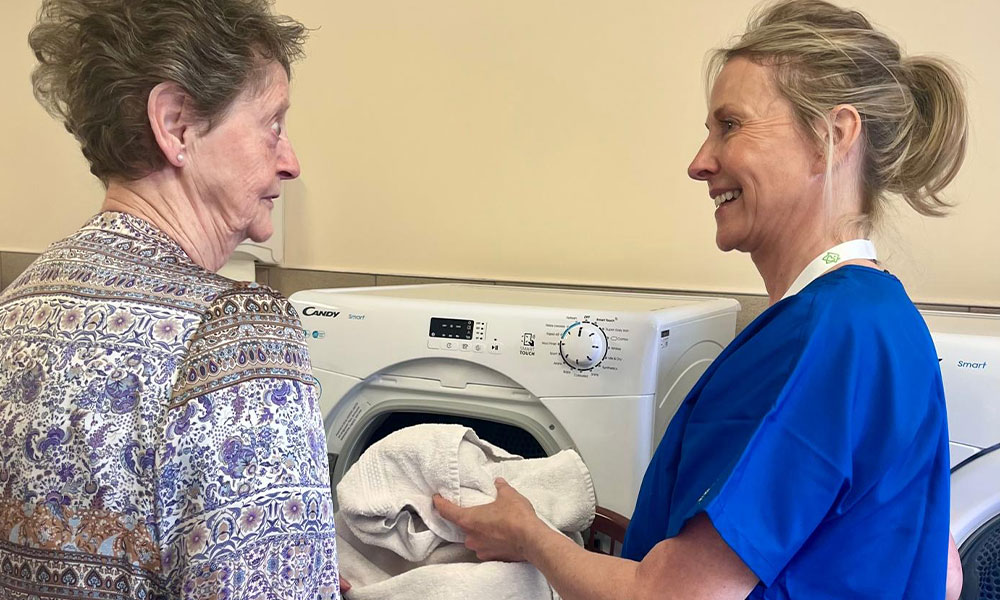
Look beyond the bedroom or brochure. Space, transport and household responsibilities can affect whether an otherwise appealing option is workable.
- For live-in care, is suitable private accommodation available?
- Who handles shopping, repairs and appointments?
- For a care home, how practical are visits and journeys?
In a rural area, discuss access, transport and staff cover directly; do not assume either option is readily available.

What can everyone realistically sustain?
A care plan should reflect what family and friends can willingly continue, as well as the support being purchased. Include the person’s preferences in that conversation.
- Which responsibilities would relatives still hold?
- What happens during illness, holidays or work commitments?
- How will the plan change if either partner needs more help?
Make any expected family contribution explicit, especially where a partner already provides substantial care.
How live-in care and care homes differ in practice
Look at the support behind the name
Both options involve people, routines and practical limits. Ask each provider to explain how its proposed arrangement would work for your situation, including rest periods, nights and changes in need.
Live-in care: support within the household
The person remains at home, while a care worker lives there as part of an agreed arrangement.
Familiar rooms, pets and existing routines may be important advantages. Sharing the home also needs thought: suitable private accommodation for the worker, household boundaries and cover during time off all need discussing.
Live-in care is not the same as one person working continuously. A standard arrangement includes breaks and overnight rest. Sleeping-night care assumes the worker can sleep, with occasional agreed help; waking-night care means someone is awake and on duty overnight. Continuous active support across day and night needs a properly staffed rota.
Ask who will respond during breaks and what happens if nights become more demanding. If two people are needed for a task, one resident worker does not remove that requirement. Our Live-in Care page explains these arrangements in more detail.
Also establish who manages the service. A managed provider, an introductory arrangement and directly employing a worker can leave the household with different responsibilities. Ask who organises cover, supervision, complaints and changes to the plan.
Care homes: support in a shared setting
The person moves into accommodation where care and shared facilities are provided on site.
A residential care home provides personal care. A nursing home also has registered nurses on duty; some homes offer both types of placement. The NHS guide to care homes explains the distinction.
A shared setting may appeal to someone who wants company close by or would prefer fewer household responsibilities. Ask to see how the home would support their own routines, interests and privacy, rather than assuming communal living suits everyone.
Staff being on site does not mean one-to-one attention at every moment. Ask about the help available at busy times and overnight, how staff respond when several residents need assistance, and whether the proposed placement can meet the person’s particular needs.
Consider the room, access to outdoor space, opportunities to go out and how family visits would work. A move is a significant change, but choosing a suitable care home is a valid choice. It is not a failure by the person or their family.
Keep the person’s life at the centre of the decision
Relationships and familiar places belong in the comparison
Begin by asking what the person would most like to preserve and what they would welcome help with. They may value their garden, want more company or feel tired of managing the house. Allow time to discuss concerns about both sharing their home and moving somewhere new.
For a couple, explore each person’s needs separately as well as what they want together. A shared home does not mean one worker can meet every combination of needs. Ask care homes about their arrangements for couples too, especially if one partner needs nursing care. Include the partner who currently provides unpaid support in the conversation.
For example, someone in a village might value staying near friends but rarely see them without transport. Ask a home-care provider how outings could work; ask a care home how those friendships could continue after a move. Compare the practical plan for maintaining those connections, including who would organise and pay for journeys.
A dementia diagnosis does not automatically remove someone’s ability to choose. Decision-making capacity concerns the particular decision at the time. If this is uncertain, involve the appropriate professional; decisions made for someone who lacks capacity must follow the proper best-interests process. NHS guidance on the Mental Capacity Act explains the principles. Relatives should not assume that concern alone gives them authority to decide.
Compare the full cost of live-in care and a care home
Separate the price of the arrangement from help with paying for it
A weekly fee is useful only when you know what it covers. Request written proposals based on the same assessed needs, then explore which funding routes may apply. The points below concern England; arrangements elsewhere in the UK differ.
Put both quotes on the same footing
Compare the total expected spending and the responsibilities left with the household.
For live-in care, list the care fee alongside the household bills that continue. Ask about worker food arrangements, travel, changeovers, breaks, extra night support and any second worker. Establish which costs are included rather than adding assumed extras.
For a care home, ask what the room fee covers and what would be charged separately. Discuss additional one-to-one support, outings, transport, personal purchases and any nursing contribution. If the former home will be retained, include its continuing costs in your own comparison.
- Put both quotes into the same weekly or monthly period.
- Separate one-off setup or moving costs from recurring spending.
- Ask what would change the fee and how increases are communicated.
- Read cancellation, absence, hospital-stay and notice terms.
For couples, request a proposal that assesses both people rather than simply comparing one home-care fee with two advertised room prices. A lower headline price is not useful if it leaves essential care or unaffordable responsibilities outside the agreement.
Find out what help may be available
Care needs, financial eligibility and a provider’s offer are separate parts of the decision.
Ask your local council for a care needs assessment. If you qualify for support, a financial assessment establishes your contribution and any council help. You can also approach providers privately; their own assessment is still needed to establish suitability.
How your home is treated can differ between care at home and a permanent care-home placement, with exceptions depending on circumstances. Read the NHS explanation of financial assessments and ask the council for an individual explanation before making property decisions or relying on a funding assumption.
Some adults with complex health needs qualify for NHS continuing healthcare, which can fund care at home or in a care home following assessment. Eligibility depends on assessed needs, not a diagnosis alone. NHS-funded nursing care is a different contribution towards nursing care for eligible nursing-home residents.
Ask for a benefits check and independent advice if the likely costs are difficult to understand. Confirm any funding offer and what it covers before signing an agreement on the assumption that help will follow. Detailed funding decisions deserve their own discussion alongside the care choice.

Explore whether live-in care could work for you
Our role is to explain the home-care option clearly
At CM Bespoke Care, we can assess the person’s needs, wishes and home environment, then explain whether our Live-in Care service may be suitable. The discussion includes night-time support, practitioner accommodation and the practical arrangements that would need to be in place.
Bring the same questions you are asking care homes. We can explain our proposed support and costs so you can weigh them alongside other options. If scheduled visits or temporary help may fit better, we can discuss that too, subject to assessment and availability.
We provide home care; we do not make the choice of setting for you. Where clinical needs or funding are central to the decision, the relevant healthcare professionals or council team should be involved alongside any provider discussions.
Check the details before choosing a care arrangement
Use conversations, visits and written answers together
A helpful discussion should leave you clearer about ordinary days, difficult moments and what happens when something changes. Compare the actual people, service and agreement on offer, then keep a record of the questions still unanswered.
Ask each provider to explain a real day
Use your shared comparison note to make the conversation specific.
Ask who would provide support on an ordinary day and overnight, what happens during staff absence and who takes responsibility if the arrangement is not working. Discuss how the person can raise a concern privately and how agreed changes reach the staff supporting them.
When visiting a care home, ask how the person’s preferences would be accommodated in the room, mealtimes and shared spaces. For live-in care, discuss how introductions, household boundaries and practitioner changeovers would work. In both cases, ask what cannot be included.
Check the relevant service’s report and rating through the Care Quality Commission’s service search. Read the findings and dates as well as the overall rating. Use them to inform questions about the actual location or service you are considering.
If arranging home support through an agency, marketplace or directly with a worker, establish who holds each responsibility. Direct employment brings employer duties, including arrangements for holidays and illness; the NHS advice on choosing a paid carer explains the main routes. A matching platform should not be assumed to provide the same management as a fully managed service.
Agree how you will know whether it is working
A care decision should include a plan for settling in and reviewing support.
Ask whether introductions, a short stay or a temporary package are possible and suitable. Check the terms first: a short arrangement is not a promise of a permanent place, the same staffing or identical fees. Our family carer’s guide to respite care covers practical preparation for temporary support.
Agree a first review and what would trigger an earlier discussion. Include the person’s comfort and preferences, whether essential care happens when needed, and whether relatives are still filling unexpected gaps. Decide who to contact if needs increase or the arrangement becomes unsuitable.
You do not have to resolve every question through a provider. These independent starting points can help you prepare for the next conversation:
- NHS: getting a care needs assessment — how to begin a council assessment.
- CQC: find a care home — service information and inspection reports.
- NHS: financial assessments — understanding the council funding process.
Frequently asked questions about live-in care and care homes
Home care in your area
Looking for support at home for yourself or someone you love? Explore our home care services across Shropshire, Herefordshire and Worcestershire, or talk to our team about the support available where you live.
Not sure whether we cover your location? Contact our team to discuss care in your area.
Home care in Shropshire
Home care in Herefordshire
Home care in Worcestershire
Related Articles

Understanding and arranging home care: a guide for families
Arranging home care starts with understanding the help you need and how it will work day to day. Our guide explains your options, assessment routes and practical ways to compare providers, agree a care plan and prepare for support to begin.

Paying for home care: costs and funding options
Understand what affects home care costs, which funding options may be available and where to begin. Our guide explains private payment, council assessments, benefits and NHS support, with practical steps for people arranging care in Shropshire, Herefordshire and Worcestershire.

Paying for home care in Shrewsbury: local funding and support
Find out where to start with home care funding in Shrewsbury, from Shropshire Council assessments to local benefits advice and NHS support. Our guide explains who to contact, what to ask and how to prepare for your next conversation.

Talking to a loved one about home care
Starting a conversation about home care can feel difficult, especially when you see things differently. Explore practical ways to raise the subject, listen to concerns and agree a useful next step while keeping your loved one involved in decisions about their support.

Caring for a family member: practical support and looking after yourself
Caring for a family member can bring practical questions and changing responsibilities. Our guide explains how to share everyday tasks, find support as an unpaid carer and make room for your own wellbeing, including what to do when caring feels too much.

Person-centred home care: care plans, dignity and working together
Person-centred home care starts with the person and the life they want to lead. This guide explains how care plans can turn wishes into practical support, protect dignity and choice, and help families, carers and healthcare professionals work together when needs change.

When you need a break: a family carer’s guide to respite care
Taking time away from caring starts with finding support that works for both of you. Explore respite options, questions to ask, possible help with costs and practical steps for preparing a handover, so you can make an informed plan for your break.

Supporting someone with dementia at home: a practical family guide
Supporting someone with dementia can bring questions about daily routines, changing needs and when to ask for help. Explore practical ways to make life at home more manageable, understand the care options available and prepare for a conversation about support.
Make your next care decision with a clearer picture
Bring the questions that matter to your household
The most useful comparison is between arrangements that could genuinely meet the person’s needs. Start with what they want from daily life, identify the support required across the day and night, and compare the full costs and responsibilities. A clear assessment, practical provider questions and written answers can make the next step more manageable.
Your priority may be keeping a couple together, maintaining friendships in a rural area or finding support that no longer depends on an exhausted relative. Those details belong in the discussion alongside personal care and clinical needs. They help show whether staying at home is workable and what another setting would need to offer.
If you would like to explore the home-care side of that decision, tell our team about the person, their address, current support and the gaps you are trying to resolve. We can discuss whether a home assessment would help and what we would need to consider before proposing care.