





Caring for a family member without losing sight of yourself
Start with what you both need
Caring often begins with something small: collecting shopping, attending an appointment or checking that a parent has eaten. Over time, those favours may become regular responsibilities. You might still think of yourself simply as a partner, daughter, son or friend, even when someone depends on your help because of illness, disability or changing needs.
You do not have to be paid, live together or receive a carer’s benefit to recognise yourself as an unpaid carer. The NHS explanation of caring and carer’s assessments describes the practical and emotional support this can involve. Naming your role can make it easier to explain what you do and ask about help for yourself.
At CM Bespoke Care, we believe useful support starts with listening to both people. Your family member’s choices matter, and so do your health, work, relationships and time. Help might come from friends, a carers’ organisation, council services or agreed home care that shares particular responsibilities. Different arrangements suit different households; paid care is one option to consider.
This guide is for adults supporting another adult in England. We will help you identify what has become difficult, organise everyday tasks and find a realistic next step. You do not need to put every suggestion into practice. Start with the part of caring that most needs to change, whether that is an uncovered afternoon, interrupted sleep or having nobody to talk to.
Support for family carers at a glance
- Include your own health, rest and commitments when planning care.
- Agree specific tasks with people who can help, and make gaps visible.
- A free carer’s assessment explores your support needs; it does not guarantee free care.
- Feeling overwhelmed is a reason to seek practical help and talk about what needs to change.
- Prepare a backup plan for illness, changed plans or a time when you cannot continue.
Six ways to make everyday caring more manageable
Choose the changes that would help your household
Good organisation should reduce the work of caring. Use these ideas to start a conversation with the person you support, keeping their preferences and your available time in view.

Ask what matters today
An everyday task is easier to discuss when you understand how the person wants it done.
- Ask before stepping in.
- Offer manageable choices.
- Allow time for what they can do themselves.
For example, choosing clothes together can preserve a familiar routine without turning every decision into a task for you.
Make the week easier to follow
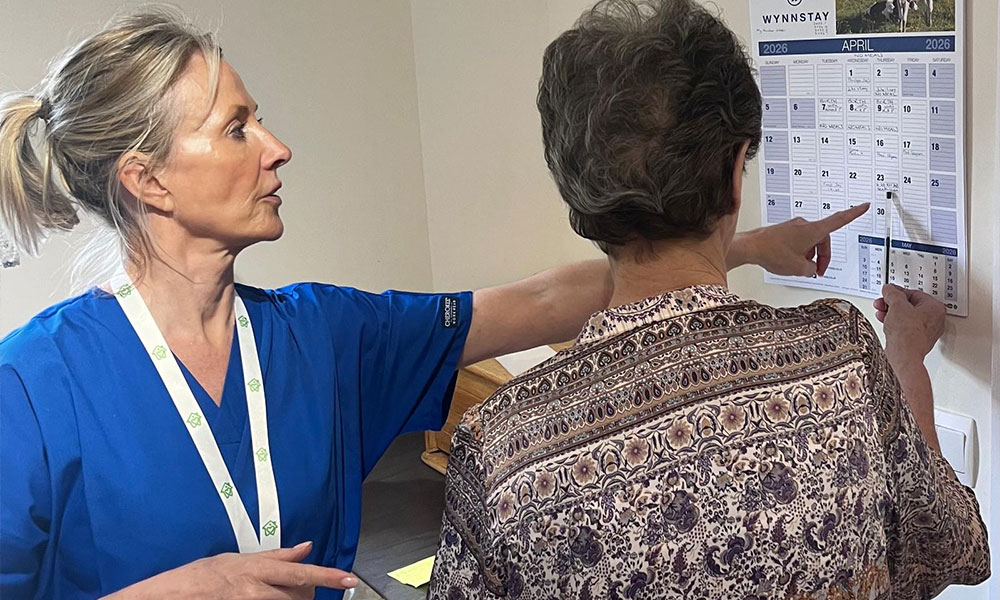
Use one calendar for visits and appointments, if that suits the person and everyone involved.
- Note who is attending.
- Include travel and preparation time.
- Leave room for changing energy levels.
Agree who updates it when plans change. A paper calendar can be just as useful as an app.

Ask for one specific commitment
People may be more able to help when the request has a clear task and time.
- Ask who can do the weekly shop.
- Arrange a regular visit or lift.
- Agree how someone will report a change.
A relative living further away might organise a delivery, with consent, even when they cannot visit regularly.

Make a handover easier
Keep a short, agreed record of the information another helper would actually need.
- Include key contacts and routines.
- Note communication preferences and interests.
- Identify where the current care instructions are kept.
Share personal information only with the appropriate people. Familiar preferences can matter alongside appointment details.

Keep space for your relationship
Try to keep some time together that is not organised around a care task.
- Choose a familiar game or programme.
- Talk about a shared interest.
- Let the person decide what appeals.
A few unhurried minutes may fit better than an ambitious outing. There is no need to make every visit productive.

Give your needs a place in the plan
Your appointments, friendships and ordinary pleasures deserve space alongside caring responsibilities.
- Identify time you want to protect.
- Agree any cover that is needed.
- Check the arrangement before making plans.
If nobody can cover, record that as a gap to discuss with a carers’ service or adult social care.
When caring for someone starts to feel too much
Make room for an honest conversation
Caring can be meaningful and difficult at the same time. What felt manageable earlier may change after an illness, disrupted nights or extra responsibilities. That deserves a fresh look at the support available.
What if you feel guilty, trapped or resentful?
You can care about someone deeply and still need parts of the arrangement to change.
Try to name the pressure behind the feeling. Is it being the only person available, losing time with your children, or feeling that you cannot leave the house? A specific difficulty gives you something to discuss.
You might say: “I want to keep helping, but I cannot manage every evening. We need to work out who can cover two nights.” Start with what you can realistically offer, rather than a promise you are already struggling to keep.
If speaking within the family feels difficult, a trusted friend or carers’ adviser may help you think it through. Mind’s guidance on looking after yourself while caring includes recognising limits and finding someone you can speak to openly.
Notice what caring is doing to your health
Repeatedly postponing your own needs is a reason to ask what support is missing.
You may be missing appointments, sleeping poorly or withdrawing from things you normally enjoy. These experiences do not establish a diagnosis, but you can talk to your GP about persistent changes in your physical or mental health.
Tell your GP practice that you are a carer and ask what support is available. The Carers Trust guide to taking care of yourself explains why making your caring role known and protecting your health matter.
Make the request practical: help attending your own appointment, someone covering a regular meal, or time away from being on call. Advice to rest is only useful if the care arrangements allow you to do so.
Asking for help when caring has become your responsibility
Be clear about the task, the timing and the gap
Other people may see your visits without seeing the calls, planning and interrupted time around them. Explain one part of the week in detail, then ask for a specific commitment: “Could you take responsibility for Tuesday’s appointment, including booking the transport?”
If family members disagree, return to what the person needs and what each helper is willing and able to do. Include the person in these discussions and agree what information can be shared. A plan should not depend on persuading one exhausted person to do more.
If there is nobody else to ask, tell the carers’ service or council that clearly. Ask about practical support, community services and an assessment of your own needs. Check what any volunteer or sitting service actually provides before relying on it for personal care or other specialist tasks.
A relative may also be unsure about outside help. Our guide to talking to a loved one about home care suggests ways to listen, explore concerns and discuss a small first step without pressure.

Getting support as an unpaid family carer
Ask about your needs as well as theirs
You can ask for advice before deciding whether paid care is right for your family. A carer’s assessment, benefits advice and workplace support address different questions, so it helps to know which route you need.
Request a carer’s assessment
In England, this is a free assessment of your support needs, separate from the care needs assessment for the person you help.
Contact the council’s adult social care team where the person you care for lives. Explain how caring affects your life and whether you feel able and willing to continue. It is not a test of how well you care.
Before the conversation, note:
- Tasks you do, including help during the night.
- The effect on your health, work and relationships.
- What happens on harder days.
- What you can continue and what needs to change.
The NHS guide to carer’s assessments explains preparation and possible outcomes.
Ask for the decision and agreed next steps in writing. An assessment does not guarantee free replacement care; clarify any eligibility decision or charges before arrangements begin. Carers UK’s assessment guidance explains the process and where to turn if you disagree.
Check financial and workplace support
Ask for an individual benefits check before assuming that caring hours alone create an entitlement.
Carer’s Allowance has conditions covering you and the person you support. Carer’s Credit is different: it can help protect your National Insurance record rather than provide a cash payment. A benefits adviser can check the wider effect of a claim.
If you are employed, GOV.UK explains unpaid carer’s leave: eligible employees can take up to one usual working week in a 12-month period. Check the notice rules and ask your employer whether it offers additional support.
Paying for help for your relative is a separate question. Our guide to home care costs and funding options explains routes to explore. Keep a note of care costs and changes to your work so an adviser can understand your circumstances.

How our team can support you and your family member
Agreeing which responsibilities care at home could share
At CM Bespoke Care, we start by understanding what the person wants help with and where your current arrangements are stretched. That might be a morning routine that conflicts with work, meals becoming difficult to organise, or a period when you need to be elsewhere.
We can discuss whether visiting support or respite care at home could meet those needs, subject to assessment and suitable staffing. Together, we agree the tasks, responsibilities and communication arrangements, with the person’s involvement and consent where appropriate.
Our role is to provide the agreed home care and keep it under review. It sits alongside your family’s contribution, council support and healthcare professionals, helping you identify what is covered and what still needs attention.
Planning your next step as a family carer
Start with one change and a plan for the unexpected
You may need a planned break, ongoing help or simply someone to explain your options. Decide which issue needs attention first, and keep the relevant contact details somewhere easy to find.
Prepare for time away and unexpected changes
A backup plan starts with knowing who can respond if you become unavailable.
With the person’s involvement, record who has agreed to help, how to contact them and where to find essential care information. Include current professional instructions and access arrangements; do not assume someone can take over unfamiliar care tasks.
If there is no dependable backup, ask adult social care or a carers’ organisation to help you plan. Carers UK’s contingency-planning guide offers a starting point. Review the plan when needs, contacts or available helpers change.
For time away that you can arrange in advance, our family carer’s guide to respite care compares options and explains preparation. Check that any replacement arrangement covers the actual time and support needed, including what happens between visits.
Find the right person to speak to
Explain what you need help with, rather than waiting until you know the name of a service.
In the areas our team supports, these council pages provide routes into carers’ support:
- Shropshire Council’s Shropshire Carers team: information on assessments, support and emergency planning, with current contact details.
- Herefordshire Council’s carer’s assessment service: how to request an assessment of your own needs.
- Worcestershire County Council’s carers’ support page: self-referral to the Carers Hub and information on assessments.
Outside these areas, contact the council where the adult you support lives. For an independent explanation before making contact, use the NHS carers’ assessment guide or Carers UK’s assessment advice.
Choose one question to take into the conversation: “Who could cover this part of the week?”, “How do I request support for myself?” or “What happens if I cannot continue?” Ask who will follow up and what to do if your situation becomes more urgent.
Frequently asked questions about caring for a family member
Home care in your area
Looking for support at home for yourself or someone you love? Explore our home care services across Shropshire, Herefordshire and Worcestershire, or talk to our team about the support available where you live.
Not sure whether we cover your location? Contact our team to discuss care in your area.
Home care in Shropshire
Home care in Herefordshire
Home care in Worcestershire
Related Articles

Understanding and arranging home care: a guide for families
Arranging home care starts with understanding the help you need and how it will work day to day. Our guide explains your options, assessment routes and practical ways to compare providers, agree a care plan and prepare for support to begin.

When you need a break: a family carer’s guide to respite care
Taking time away from caring starts with finding support that works for both of you. Explore respite options, questions to ask, possible help with costs and practical steps for preparing a handover, so you can make an informed plan for your break.

Live-in care or a care home? A family decision guide
Choosing between live-in care and a care home means looking beyond the weekly price. Explore how each option could fit someone’s routines, relationships and support needs, with practical questions about overnight care, funding and the arrangements that make everyday life work.

Paying for home care: costs and funding options
Understand what affects home care costs, which funding options may be available and where to begin. Our guide explains private payment, council assessments, benefits and NHS support, with practical steps for people arranging care in Shropshire, Herefordshire and Worcestershire.

Talking to a loved one about home care
Starting a conversation about home care can feel difficult, especially when you see things differently. Explore practical ways to raise the subject, listen to concerns and agree a useful next step while keeping your loved one involved in decisions about their support.

Coming home from hospital: arranging care and support
Preparing to come home from hospital? Our guide explains what to ask before discharge, which support options may help and how to check the practical arrangements, so you can plan the return home with a clearer understanding of what happens next.

Eating well at home: practical nutrition tips for older adults
Shopping, cooking or a smaller appetite can make eating well at home more difficult. Explore practical meal ideas, ways to offer support without taking over, and when changes in eating, drinking or weight need advice from a healthcare professional.

Person-centred home care: care plans, dignity and working together
Person-centred home care starts with the person and the life they want to lead. This guide explains how care plans can turn wishes into practical support, protect dignity and choice, and help families, carers and healthcare professionals work together when needs change.
Find a more manageable way to care for your family member
Talk with us about the support your household needs
Sharing responsibilities begins with a clear picture of everyday life: what your family member wants help with, what you can realistically provide and where support is missing. Your own appointments, rest and relationships belong in that picture too. A practical next step might be a carer’s assessment, an agreed task for someone else or a conversation about regular help.
If home care could be part of that plan, tell our team which parts of the day have become difficult and what you would like to change. Perhaps you want to stay closely involved while someone else supports personal routines, or need planned cover so you can keep a commitment of your own.
We can explore those needs with you and your family member, explain what suitable support might involve and discuss availability and costs. The aim is an arrangement that respects their choices and recognises your limits.