




How do you begin arranging home care?
Start with the help needed, then explore how to provide it
Home care, also called domiciliary care, is support provided in your own home. It can include personal care, meals, practical tasks and companionship. You might be considering help with one difficult part of the day, responding to a change in health or planning ahead. Describing what happens in an ordinary week is a useful starting point, before deciding on a service or number of hours.
Home care is not only for older people. Adults living with a disability or health condition may also need support, temporarily or over a longer period. The NHS introduction to care and support explains the wider options. Accepting help can still leave the person in charge of familiar routines and the things they want to do themselves.
Our Home Care service is one way to arrange agreed everyday support. Depending on the situation, help from people you trust, community services, equipment, council support or another care setting may also be useful. Explore what each option would actually provide, including any gaps between visits and responsibilities left with the household.
In this guide, we help you prepare a needs summary, understand assessment routes, compare provider proposals and plan for care to start. The assessment and funding information applies to adults in England; arrangements differ elsewhere in the UK. Keep the person receiving support involved throughout, including whom they want to share information with.
Arranging home care at a glance
- Describe everyday life. Note the help needed, when it matters and what the person wants to keep doing independently.
- Consider the whole arrangement. Include time between visits, night-time needs and realistic family support.
- Separate the assessments. Council needs, financial and provider assessments answer different questions.
- Compare clear proposals. Ask how staff, timing, cover, communication and costs would work for you.
- Agree the details before starting. Record responsibilities, contacts, access and how changes will be handled.
- Keep listening and reviewing. Check that the support still fits the person’s needs and preferences.
What can home care help with?
Six areas to consider when describing your needs
Use these examples to identify where help would be useful and what you would prefer to manage yourself. The NHS guide to help at home explains common support options. The tasks a provider agrees to carry out should be recorded in the care plan, with any equipment, training or professional input they require.
Personal care and daily routines
Help with personal routines should respect your privacy, preferences and the parts you can comfortably do yourself.
- Washing, dressing and getting ready.
- Toileting and agreed personal care.
- Morning, evening or bedtime support.
Explain what makes assistance comfortable for you, including preferred timings and any communication or personal-care preferences.

Meals, drinks and eating
Support may make food preparation and regular drinks easier while reflecting your choices and familiar meal routines.
- Shopping for food you enjoy.
- Preparing meals and drinks.
- Agreed help with eating and drinking.
Share dietary instructions from your healthcare team and explain any difficulties that need assessment before support is agreed.
Medication routines
Medicines support depends on assessed need, clear instructions and the help recorded in the provider’s care plan.
- Prompts or other agreed assistance.
- Clear responsibility for each task.
- A record of support and concerns.
NICE guidance on medicines support requires appropriate training and assessed competence. Care workers do not decide to change prescribed doses.

Moving around and getting out
Describe where movement is difficult, including getting around at home and reaching places that matter to you.
- Assistance with everyday movement.
- Support for outings or appointments.
- Using agreed equipment as instructed.
Ask what assessment, equipment and staff skills are needed. The plan should identify any tasks requiring more than one worker.
Practical help at home
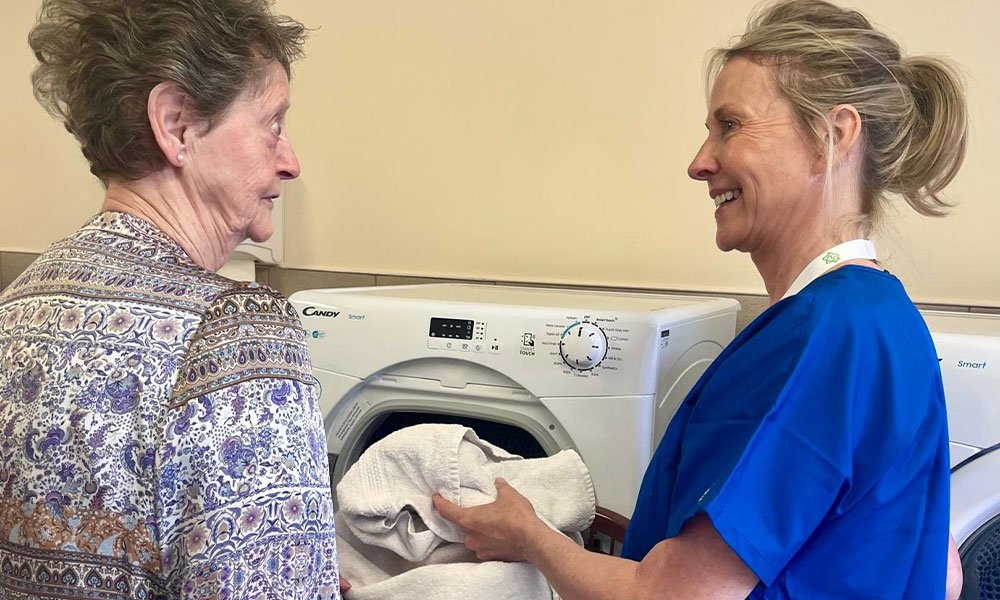
A little help with everyday jobs may leave more time and energy for the things you value.
- Light household tasks in the plan.
- Shopping and essential errands.
- Support with manageable daily routines.
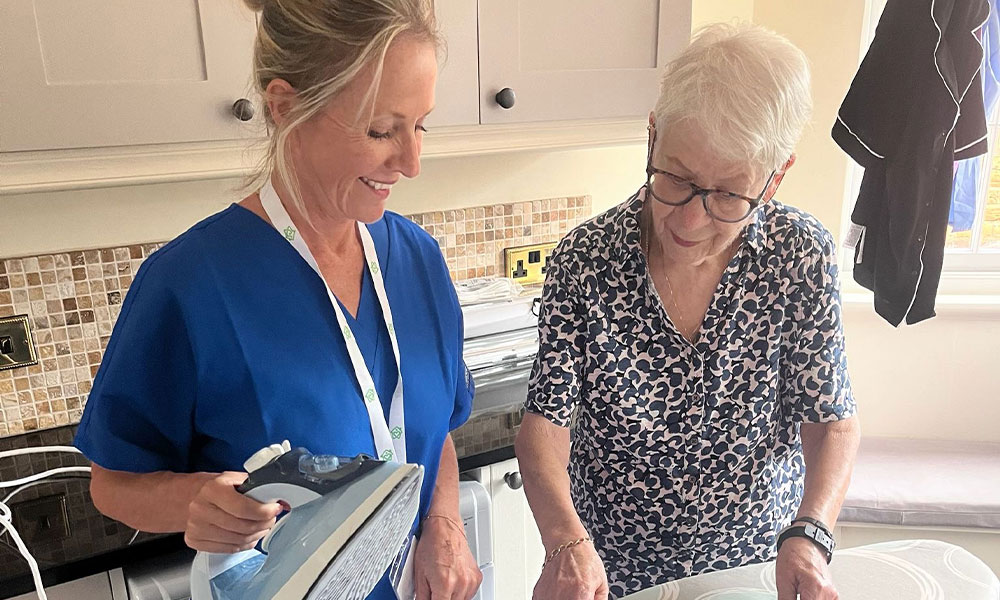
Be specific about the work involved. Domestic help can be arranged separately, and a care visit does not automatically include every household job.

Companionship and connection
Company, interests and relationships can matter as much to someone’s week as help with practical tasks.
- Conversation and shared activities.
- Keeping in touch with people.
- Continuing familiar hobbies and outings.
Describe what an enjoyable day looks like, including time alone by choice. Support should fit the person’s interests rather than assume everyone enjoys the same activities.
Which home-care arrangement could fit your life?
Look at when help is needed, including the gaps
A service name does not tell you everything about the support available. Compare the proposed visits, staffing and time without paid help against your needs summary. Consider what the person wants as well as what the household can sustain.
Visiting care and temporary support
Visiting care provides agreed help at planned times, with the length and purpose of each visit matched to the person’s needs.
It may involve help getting ready, preparing lunch or settling for the evening. Explain any time-sensitive routines and ask which visit times or arrival windows the provider can offer. Allow enough time for the agreed care without rushing.
Support may be ongoing or needed for a limited period. If a usual carer needs time away, replacement support is often called respite care. Our Respite Care at Home service explains the arrangements we can discuss.
Respite can also include day services or a short stay elsewhere. The NHS guide to carers’ breaks describes the options. Check suitability, availability, payment and who will provide any help outside the agreed arrangement.
Live-in care and overnight needs
Live-in care means a worker lives in the home as part of an agreed arrangement; it does not mean one person works continuously.
This may be worth exploring when support is needed across more of the day. Discuss suitable accommodation, household routines, privacy and how sharing the home would feel. Our Live-in Care service explains the practical considerations.
Ask about breaks, time off and overnight rest. Occasional help during a sleeping night differs from having someone awake and on duty. Frequent night-time needs or tasks requiring two workers need suitable staffing, rather than an assumption that a live-in worker covers everything.
Home is not automatically the right setting for everyone. If you are comparing more extensive support at home with a move, our guide to live-in care or a care home explores daily life, responsibilities and the questions to take to each provider.
How can you judge a provider’s answers?
Look for a practical explanation you can use
Words such as “flexible” or “personalised” mean more when a provider explains how they apply to your day. Ask it to work through one priority from your summary: a morning routine, help getting to a regular activity or support when family cannot be there. The answer should make responsibilities and limits easier to understand.
For example, if a provider says it arranges cover when a regular worker is absent, ask who organises it, how the replacement learns the current plan and how you will be told whom to expect. Also ask whom to contact if nobody arrives. A useful answer describes those arrangements rather than simply repeating that cover is available.
Keep three short notes for each provider: what it proposes, what it has confirmed in writing and what still needs clarification. Differences may reflect genuine limits or different assessments of the care needed. Ask why a longer visit or another arrangement has been suggested before comparing the price alone.
Quality also includes how the person’s choices are heard and respected. The CQC fundamental standards cover dignity, consent and person-centred care. If an important answer remains vague, ask again before committing; a friendly conversation or positive review cannot settle every practical question.

How do you arrange and pay for home care?
Separate the support you need from how it will be funded
You can contact providers about privately paid care, ask the council about support, or explore both routes. If you are in hospital, involve the discharge team before going home. Be clear about what has actually been agreed, who is arranging it and who will pay.
Understand the different assessments
A council needs assessment, financial assessment and provider assessment each answer a different question.
A council care needs assessment considers daily life and the support that could help. It is free, including if you expect to pay for care yourself. Use GOV.UK’s council assessment finder to reach the local service. Take your needs summary and explain harder days as well as what is working.
A separate financial assessment considers whether the council will contribute and what you may need to pay. Having a needs assessment does not itself mean the resulting care will be free.
A provider’s assessment considers whether its service can meet your needs and how the proposed care would work. Explain relevant health, medication, mobility and communication information, along with your wishes and whom you want involved. This assessment does not award council or NHS funding.
If family or friends provide regular unpaid help, they can ask about a separate carer’s assessment for their own support needs. If a council decision is unclear, ask for the reasons, information about other local help and how to seek a review or complain.
Get a clear picture of the costs
Compare the full proposed arrangement and written terms, rather than an hourly rate on its own.
Request a written quote showing the visits, duration and number of workers, with any travel, weekend or bank-holiday charges. Ask about minimum commitments, cancellations, price changes and what happens to charges during a hospital stay. Check whether a different staffing pattern explains a difference between quotes.
You can arrange and pay for care privately, while still asking about relevant support. Depending on circumstances, council help, disability benefits or an assessment for NHS Continuing Healthcare may be worth exploring. A diagnosis alone does not establish entitlement.
If the council agrees to meet eligible needs, ask about its care plan and personal budget. Direct payments can allow you to arrange agreed support yourself, with conditions and responsibilities. Check what the council has agreed to fund before signing with a provider.
Our guide to paying for home care explains the funding routes, benefit checks and quote questions in more detail. Home care is not automatically cheaper than another option; include ordinary household expenses and any support still needed outside the package.

How our team can help you explore home care
Bring us the routines and questions that matter to you
At CM BESPOKE CARE, we offer a free, no-obligation home assessment to understand the person’s needs, preferences and home circumstances. Tell us what help you are considering, when it is needed and which parts of daily life you want to preserve. We can explain the support we propose and its costs.
Our Home Care service covers agreed everyday support. We can also discuss Live-in Care or Respite Care at Home where those arrangements may fit. Suitability, the address, visit pattern and available staff all affect what we can provide.
Our team includes specialists in supporting people living with different conditions. We consider the skills required and work alongside healthcare professionals where their input is needed. For someone with a life-limiting illness, our Palliative Care at Home service explains personal and practical support alongside the wider care team.
Choosing a home-care provider and preparing to start
Check the service, then make the arrangements specific
Ask your council about local providers and check availability for your address and needs. For an agency providing regulated personal care in England, use the CQC service search to check the relevant service, report date and available rating. Registration requirements depend on the activity and arrangement: domestic-only help and some directly employed arrangements are different. Follow the checks with a conversation about your own circumstances.
Questions that make provider comparisons useful
Use your needs summary with each provider, and ask what its answer would mean in an ordinary week.
These questions bring together the care, staffing and practical commitment. Note the proposed answer and anything you still need clarified:
- Can you meet these needs? Ask which tasks the service can provide and which require another professional. Check how relevant competence is assessed, including any agreed medicines support.
- How do you recruit and match workers? Ask about appropriate background checks, references, training and supervision, alongside communication, personal-care preferences and introductions.
- Who will usually visit, and how does cover work? Ask about the regular team, absences, handovers and how you will be told about a change of worker.
- How will the visit times and duration work? Discuss arrival windows and time-sensitive routines. Check how much time is available in the home and how travel between clients is allowed for.
- What happens if a visit is late or missed? Ask who notices, who contacts you, what cover can be arranged and whom you should call if nobody arrives.
- How will the person stay involved and informed? Ask how consent, preferences, care notes and changes are recorded, and how updates can be shared with people they choose.
- What am I agreeing to? Obtain written charges and terms, including how to change or end the arrangement. Ask who handles concerns and how the care will be reviewed.
The CQC guide to a good home-care agency describes the practice behind a reliable, respectful service. If a task needs specialist clinical skills, ask how professional input, training and responsibility are arranged; do not assume that all workers can carry it out.
If you employ a worker directly, you take on employer responsibilities, including cover for absence. An introductory service may also leave you responsible for managing the care. The NHS explanation of employing a carer is a starting point. Establish who is responsible for employment, supervision and cover before choosing an arrangement.
Agree the plan before the first visit
A clear start means knowing what will happen, who is responsible and how to get help when plans change.
Once you have chosen a suitable provider, check the written plan and agreement with the person receiving care. Ask for an explanation of anything that does not match your discussions:
- Support and timings: agreed tasks, visit lengths, arrival windows and arrangements between visits or overnight.
- The first visit: when it starts, whom to expect, introductions and how staff identify themselves.
- Access: keys or entry arrangements, confidentiality and what staff will do if there is no answer.
- Contacts and cover: the responsible manager, out-of-hours contact, delays, missed visits and changes of worker.
- Communication and review: who may receive updates, where the plan is kept and how changes or concerns will be followed up.
Be explicit about any help expected from family or friends. If nobody can reliably cover a gap, say so before the arrangement starts. If a task or medicine needs input from a healthcare professional, establish who will obtain and communicate the relevant instructions.
After care begins, check whether the tasks, timings and approach are working for the person. Ask how to request a review when needs or preferences change. The NHS guide to council care plans explains the council route; ask a privately arranged provider about its own review process. A change should be discussed and recorded, rather than left as an informal assumption.
For independent starting points, use NHS care needs assessment guidance to explore public support, or the CQC fundamental standards to understand expectations of regulated care. You can begin with one action: prepare your summary, request an assessment or ask a shortlisted provider to explain an unanswered point.
Frequently asked questions about arranging home care
Home care in your area
Looking for support at home for yourself or someone you love? Explore our home care services across Shropshire, Herefordshire and Worcestershire, or talk to our team about the support available where you live.
Not sure whether we cover your location? Contact our team to discuss care in your area.
Home care in Shropshire
Home care in Herefordshire
Home care in Worcestershire
Related Articles

When you need a break: a family carer’s guide to respite care
Taking time away from caring starts with finding support that works for both of you. Explore respite options, questions to ask, possible help with costs and practical steps for preparing a handover, so you can make an informed plan for your break.
Live-in care or a care home? A family decision guide
Choosing between live-in care and a care home means looking beyond the weekly price. Explore how each option could fit someone’s routines, relationships and support needs, with practical questions about overnight care, funding and the arrangements that make everyday life work.

Paying for home care: costs and funding options
Understand what affects home care costs, which funding options may be available and where to begin. Our guide explains private payment, council assessments, benefits and NHS support, with practical steps for people arranging care in Shropshire, Herefordshire and Worcestershire.

Paying for home care in Shrewsbury: local funding and support
Find out where to start with home care funding in Shrewsbury, from Shropshire Council assessments to local benefits advice and NHS support. Our guide explains who to contact, what to ask and how to prepare for your next conversation.

Talking to a loved one about home care
Starting a conversation about home care can feel difficult, especially when you see things differently. Explore practical ways to raise the subject, listen to concerns and agree a useful next step while keeping your loved one involved in decisions about their support.

Caring for a family member: practical support and looking after yourself
Caring for a family member can bring practical questions and changing responsibilities. Our guide explains how to share everyday tasks, find support as an unpaid carer and make room for your own wellbeing, including what to do when caring feels too much.

Coming home from hospital: arranging care and support
Preparing to come home from hospital? Our guide explains what to ask before discharge, which support options may help and how to check the practical arrangements, so you can plan the return home with a clearer understanding of what happens next.

Eating well at home: practical nutrition tips for older adults
Shopping, cooking or a smaller appetite can make eating well at home more difficult. Explore practical meal ideas, ways to offer support without taking over, and when changes in eating, drinking or weight need advice from a healthcare professional.

Person-centred home care: care plans, dignity and working together
Person-centred home care starts with the person and the life they want to lead. This guide explains how care plans can turn wishes into practical support, protect dignity and choice, and help families, carers and healthcare professionals work together when needs change.
Let’s talk about a workable care arrangement
Bring your needs, priorities and unanswered questions
A useful care arrangement starts with the person’s everyday life: what help is wanted, when it matters and what they want to keep doing themselves. A short needs summary, clear provider answers and agreed responsibilities give you a practical basis for deciding. Keep reviewing those details as circumstances change.
You may be exploring a few visits, looking for a break from family caring or reconsidering support that no longer fits. Alongside paid care, keep relevant council, healthcare and community options in view. If you would like to explore our service, we can discuss how the help you need relates to what our team can provide.
Tell us where care is needed, the routines you want help with and any important timings or preferences. Bring the questions that remain open, including costs and starting arrangements. We can explain what may be possible and whether a free home assessment would be a useful next step.