





How do you talk to a loved one about home care?
Start with their experience of everyday life
A useful first conversation begins with something specific you have noticed and a question about how the person feels. You might have seen that preparing meals takes more effort, or heard them say that getting ready in the morning is tiring. Ask what those changes mean to them before suggesting a solution. They may be most concerned about something you had not considered.
For a parent, partner, relative or friend, the words “home care” can bring up questions about privacy, money and who will be coming into their home. Explain what you mean in everyday terms. Our home care service can include support with daily routines, meals and companionship, depending on the person’s needs. Exploring that possibility does not mean you need to settle the arrangements during the first discussion.
You may also see the situation differently. A task that worries you might still feel manageable to them, while something they find exhausting may go unnoticed. Give both perspectives room. Try to understand what they want to keep doing for themselves and where they would welcome some help.
In this guide, we focus on preparing for that conversation, responding to common concerns and finding a manageable next step. The assessment and support routes described are for adults in England. If there is an immediate safety or health concern, seek appropriate help rather than waiting for the ideal moment to talk.
The main things to keep in mind
- Choose a comfortable time and ask whether the person is happy to talk.
- Describe a particular concern without labelling them as unable to cope.
- Listen to what matters to them, including worries about privacy, cost or change.
- Discuss realistic options and check any promises about visits or arrangements.
- Agree a next step together where possible; one conversation may be enough simply to understand each other.
- Ask for professional advice if health, safety or decision-making concerns need more support.
Six ways to prepare for a conversation about home care
Make it easier to speak honestly and be heard
You do not need a perfect script. A little preparation can help you explain your concern clearly, while leaving space for your loved one to say what they think.

Choose a comfortable setting
For a planned conversation, find a familiar place where you can speak without feeling rushed. Ask whether now is a good time.
- Turn down background noise.
- Make sure any glasses or hearing aids they use are available.
- Avoid an unexpected gathering of relatives.
If they would like someone else there, ask whom they would feel comfortable involving. A quieter, smaller discussion may make it easier for everyone to contribute.
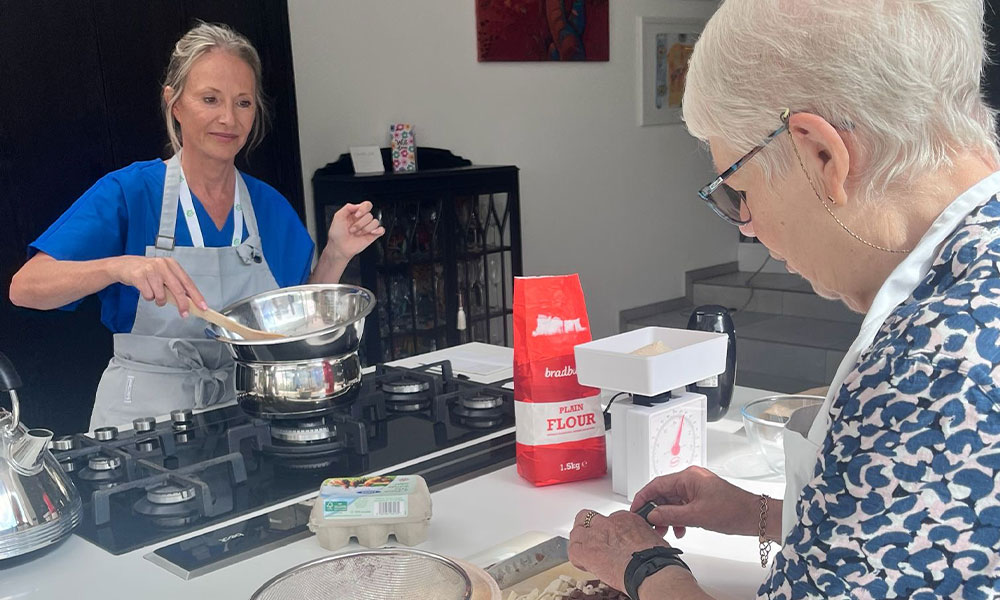
Use one clear observation
Describe what you have noticed without turning the conversation into a list of everything that feels wrong.
- “You mentioned cooking feels tiring lately.”
- “I noticed you were finding the shopping bags heavy.”
- “How are you finding mornings at the moment?”
Allow for their explanation. One difficult day does not tell you everything about someone’s needs, and a conversation should help you understand the wider picture.

Ask what they want to keep doing
Talk about the parts of life they value, alongside the tasks that are becoming harder. Their priorities should shape the options you explore.
- Which routines matter most to them?
- What do they enjoy doing independently?
- Is anything using energy they would rather spend elsewhere?
For example, help with preparing a meal may be worth discussing if cooking leaves little energy for seeing a friend afterwards.

Ask, then give them time
Leave a pause after your question. Try not to answer it yourself or immediately explain why your suggestion would work.
- “What would make the week a little easier?”
- “How would you feel about having some help?”
- “What worries you most about that?”
You can check your understanding by saying, “It sounds as though having someone unfamiliar in the house is the main concern. Have I understood that properly?”

Describe the help accurately
A broad suggestion such as “getting a carer” can mean different things to different people. Explain the particular support you have in mind.
- Would help with one routine be useful?
- Which tasks would they want to keep doing?
- What would they need to know about the care worker?
Write down unanswered questions for a provider. Avoid promising particular visit times, the same worker every day or a trial arrangement before checking what is available.

Keep the first step manageable
There is no need to decide the whole future at once. Ask what, if anything, they would feel comfortable exploring next.
- Read a short guide together.
- Write down questions about support.
- Choose another time to discuss it.
Be clear about what has been agreed. Permission to gather information is different from agreement to arrange visits, and keeping that distinction clear can help preserve trust.
Understanding concerns about accepting home care
Find out what sits behind the hesitation
A “no” can mean different things: the help feels unnecessary, the cost is unclear, or the thought of a stranger entering the home feels uncomfortable. Ask about the particular concern before offering reassurance.
“I do not want someone taking over”
Ask what the person would want to remain in control of.
It may be their morning routine, how food is prepared or who can see personal information. These are useful details to bring into any discussion with a provider.
Rather than saying that nothing will change, acknowledge that having support does involve adjustments. Ask how visits could fit around their preferences and which parts of a task they would like to do themselves.
If unfamiliar people are the concern, find out how introductions work, how staff are identified and how changes of care worker are communicated. Explain what you have verified, and be honest about anything that still needs an answer.
“It will cost too much” or “You should not have to help”
Talk about practical limits without making the person feel responsible for everyone’s wellbeing.
If money is the concern, suggest finding out the likely cost before deciding. Avoid assuming that care will be free or that all savings will have to be used.
Our guide to paying for home care explains the questions to ask about charges, assessments and possible funding routes.
If they feel uncomfortable relying on family, ask which help they would welcome from you and which they would prefer to receive elsewhere. You can also explain honestly what you can sustain: “I can visit on Saturdays, but I cannot reliably manage every weekday morning.”
Make the home care conversation specific to everyday life
Start with the difficulty the person actually wants to solve
For example, your partner might say they are too tired to cook an evening meal but do not want someone taking over the kitchen. You could ask, “Would preparing the ingredients together help, or is it standing at the cooker that is tiring?”
The answer might point towards help with shopping, a different way of preparing food, or support at mealtimes. It might also reveal a health concern that needs a conversation with their GP. You do not have to decide which option is right before listening.
If they are interested in paid support, you could suggest asking what a visit would involve and how they could stay involved in preparing their own meal. If they prefer another approach, explore whether it addresses the difficulty they have described.
The useful outcome is a clearer understanding of the problem and an agreed question to investigate. That gives the next conversation somewhere practical to begin.

What if your loved one does not want home care?
Respect their decision while taking concerns seriously
You may remain worried after a conversation. Separate a difference of opinion from a concern that needs professional help, and avoid treating reluctance as proof that the person cannot decide for themselves.
When they continue to say no
Find out what they are declining, then discuss what they would be comfortable doing next.
Ask whether the concern is about the particular task, the suggested arrangement, the timing or receiving any help at all. Someone who does not want personal care may still welcome help with shopping, or simply want more information. Offer those possibilities as real choices, including the choice not to take them up.
If there is no immediate concern, give the conversation some space. Ask whether another time would suit, or what change would make it useful to talk again. Be clear about any small step they have agreed to: asking a question or meeting someone is not permission to start care visits. Avoid surprise arrangements or promises about a trial before checking the provider’s terms.
In England, adults must be presumed able to make their own decisions unless established otherwise. A choice others consider unwise does not, by itself, show a lack of mental capacity. Support the person to understand the information and express their wishes rather than treating disagreement as a reason to take over.
The NHS explanation of the Mental Capacity Act describes capacity as specific to a decision and time. A dementia diagnosis does not automatically remove it, and being a relative does not automatically give you decision-making authority. Ask the relevant health or social care professional for advice if you have concerns.
When everyday needs are still going unmet
Respecting someone’s wishes can sit alongside asking for advice about a developing concern.
If meals are repeatedly missed, personal care has become difficult or essential help is no longer available, explain the actual problem to the appropriate professional. Encourage your loved one to speak to their GP about new or worsening health concerns and ask whether they would like support with that conversation.
For difficulty managing daily life in England, contact the council’s adult social care team about a care needs assessment. Explain what has changed, what the person says they need, who currently helps and what remains uncovered. An assessment is free; it does not mean any resulting care will be free.
Where possible, involve the person and discuss what information will be shared. If you are worried about abuse, neglect or serious risks to their wellbeing, seek advice from adult social care rather than relying on another family discussion. Age UK’s guidance on concerns about someone explains safeguarding routes and consent. Declining home care alone does not establish abuse, neglect or a lack of capacity.
Do not wait for a routine appointment if urgent help is needed. Call 999 if someone is in immediate danger. For urgent medical help when it is not an emergency, use NHS 111. Tell the professional how soon help is needed and what makes the situation urgent.

How we can help you explore home care together
Bring us the questions that matter to your loved one
At CM BESPOKE CARE, we can talk through the everyday support you are considering and explain how our home care arrangements work. Useful starting points include the routines your loved one values, the tasks they find difficult and any concerns about welcoming a care worker into their home.
You can ask about visit arrangements, introductions, costs and how preferences are discussed during an assessment. If your loved one would like to join the conversation, we can hear their questions directly. Let us know what would help them take part comfortably.
Having clear information can help you decide which options to explore. Where another kind of support or professional advice is needed, that should remain part of the conversation too.
Agreeing the next step after talking about home care
Keep the plan clear and realistic for everyone involved
A helpful conversation may lead to a question, a phone call or a decision to talk again. Check that everyone has understood the next step in the same way, including the person who would receive support.
Write down the next step, the responsibility and the timing
A short shared note helps everyone understand what has actually been agreed.
Record the question or task, who will take it forward and when you will discuss the outcome. For example: “I will ask how help with lunch could work, then we will look at the information together on Friday.” Check that the person is comfortable with the plan and include anything they do not want.
Distinguish gathering information from booking an assessment or agreeing to visits. Ask before sharing personal details or inviting someone else into the discussion. If a trusted friend or professional might help, discuss their involvement with your loved one wherever possible.
If the decision is to wait, agree whether to check in again and what changes would prompt earlier advice. A plan to talk next week should not prevent you seeking help sooner if health or safety concerns develop. Where a professional is already involved, keep their agreed contact route available.
If your loved one wants to explore paid support, our guide to understanding and arranging home care explains assessment routes, comparing providers and preparing for care to begin. Take the next step around their wishes, circumstances and any immediate needs.
Be clear about the help you can keep providing
Your loved one’s choices matter, and so do your own needs and practical limits.
Explain what you can reliably do and where another arrangement is needed: “I can help with shopping on Saturday, but I cannot cover weekday lunches.” Give the task and timing rather than an ultimatum. Avoid leaving the plan dependent on help that you are no longer able to provide.
In England, you can ask the council’s adult social care team about a carer’s assessment. This looks at your own support needs separately from the other person’s assessment. Explain how caring affects your health, work and rest, and whether you feel able and willing to continue.
If essential care cannot safely continue, contact adult social care or the existing social worker and explain the gap and urgency. Our guide to caring for a family member and looking after yourself covers practical support and limits in more detail. For a planned break, see our family carer’s guide to respite care.
For independent guidance, Age UK explains how to approach concerns, while Carers UK explains how to get help in an emergency. You do not have to work out every support route alone.
Frequently asked questions about discussing home care
Home care in your area
Looking for support at home for yourself or someone you love? Explore our home care services across Shropshire, Herefordshire and Worcestershire, or talk to our team about the support available where you live.
Not sure whether we cover your location? Contact our team to discuss care in your area.
Home care in Shropshire
Home care in Herefordshire
Home care in Worcestershire
Related Articles

Understanding and arranging home care: a guide for families
Arranging home care starts with understanding the help you need and how it will work day to day. Our guide explains your options, assessment routes and practical ways to compare providers, agree a care plan and prepare for support to begin.

When you need a break: a family carer’s guide to respite care
Taking time away from caring starts with finding support that works for both of you. Explore respite options, questions to ask, possible help with costs and practical steps for preparing a handover, so you can make an informed plan for your break.

Live-in care or a care home? A family decision guide
Choosing between live-in care and a care home means looking beyond the weekly price. Explore how each option could fit someone’s routines, relationships and support needs, with practical questions about overnight care, funding and the arrangements that make everyday life work.

Paying for home care: costs and funding options
Understand what affects home care costs, which funding options may be available and where to begin. Our guide explains private payment, council assessments, benefits and NHS support, with practical steps for people arranging care in Shropshire, Herefordshire and Worcestershire.

Caring for a family member: practical support and looking after yourself
Caring for a family member can bring practical questions and changing responsibilities. Our guide explains how to share everyday tasks, find support as an unpaid carer and make room for your own wellbeing, including what to do when caring feels too much.

Coming home from hospital: arranging care and support
Preparing to come home from hospital? Our guide explains what to ask before discharge, which support options may help and how to check the practical arrangements, so you can plan the return home with a clearer understanding of what happens next.

Person-centred home care: care plans, dignity and working together
Person-centred home care starts with the person and the life they want to lead. This guide explains how care plans can turn wishes into practical support, protect dignity and choice, and help families, carers and healthcare professionals work together when needs change.
Take the next conversation about home care one step at a time
We can help you turn unanswered questions into useful information
Start with the person’s experience: what feels difficult, what they want to keep doing and what concerns them about receiving help. Listen to the answer before suggesting an arrangement. A useful outcome might be one question to investigate, a small agreed change or another conversation. Be clear about who will do what, while recognising when a concern needs professional advice sooner.
If home care is one of the options your loved one wants to explore, bring those questions to our team. We can explain the support you are considering, discuss how preferences are explored and help clarify what an assessment or visit would involve. Tell us about the everyday task, the person’s wishes and any practical limits on existing help.
You can contact CM BESPOKE CARE to gather information before deciding what to do next. Where your loved one wants to join the discussion, their questions and preferences should help shape it. The aim is a clearer, workable next step that respects their involvement.