





How Live-in Care works
A care practitioner living in the home, with support planned around real life
When regular home-care visits are no longer enough, live-in care can provide a reassuring presence and practical support throughout the day. A carefully matched care practitioner lives in the home and supports the person according to an agreed care plan, while respecting their privacy, choices and household routines.
Live-in care can be considered as an alternative to residential care, as temporary support following illness or hospital discharge, as respite for a family carer, or as a longer-term arrangement. It may also support couples who want to remain together and people who would prefer to continue living with their pets.
Every arrangement begins with a free, no-obligation assessment. The team considers the person’s care needs, routines, risks, night-time requirements, desired outcomes, the home environment and whether a live-in placement can be delivered safely and respectfully.
Live-in Care at a glance
- Free, no-obligation home assessment
- One-to-one support in the person’s own home
- Temporary or longer-term arrangements
- Care planning, property review and careful matching
- Private bedroom and suitable facilities required
- CQC-rated Good homecare service
- Care reviewed at least monthly and whenever needs change
Who Live-in Care can support
Help when needs arise across the day, not only at fixed visit times
Live-in Care is not defined by age or a single diagnosis. It may suit an adult whose assessed needs, home environment and preferences can be supported through a managed care practitioner living in the household.
People and circumstances
Live-in home care may be considered for:
- Older people and adults living with disabilities or long-term health conditions
- People living with dementia, Parkinson’s, reduced mobility, frailty or recovery needs
- Someone returning home after illness, surgery or hospital treatment
- A person who lives alone and needs help at several or less predictable points in the day
- Couples who want to remain together at home, where one arrangement can safely meet both care plans
- Families who can no longer provide the same level of day-to-day support themselves
- People who want to remain close to familiar rooms, routines, pets and their local community
Live-in care is planned around the person’s abilities, preferences and household life, with support adjusted when needs or routines change.
Signs that live-in support may help
It may be time to begin a conversation when:
- Important needs are arising between scheduled Home Care visits
- Personal care, meals, medication or mobility now require help at several points each day
- Being alone for longer periods is causing worry, confusion or distress
- Night-time needs are becoming more frequent or difficult for a family carer to manage
- A partner or relative is becoming tired, unwell or unable to sustain the current caring routine
- A move into residential care is being considered, but the person would like to explore staying at home
- The household needs a more consistent plan after a fall, illness or hospital discharge
These situations do not automatically mean Live-in Care is the right answer. They are good reasons to talk through the person’s wishes, day and night needs, clinical input, home suitability and realistic alternatives.
What live-in home care can include
One-to-one support built around the person and their household
The exact support is agreed through assessment and recorded in a person-centred care plan. Live-in care can combine personal assistance, practical support, companionship and reassurance while helping the person continue doing as much as they safely can.
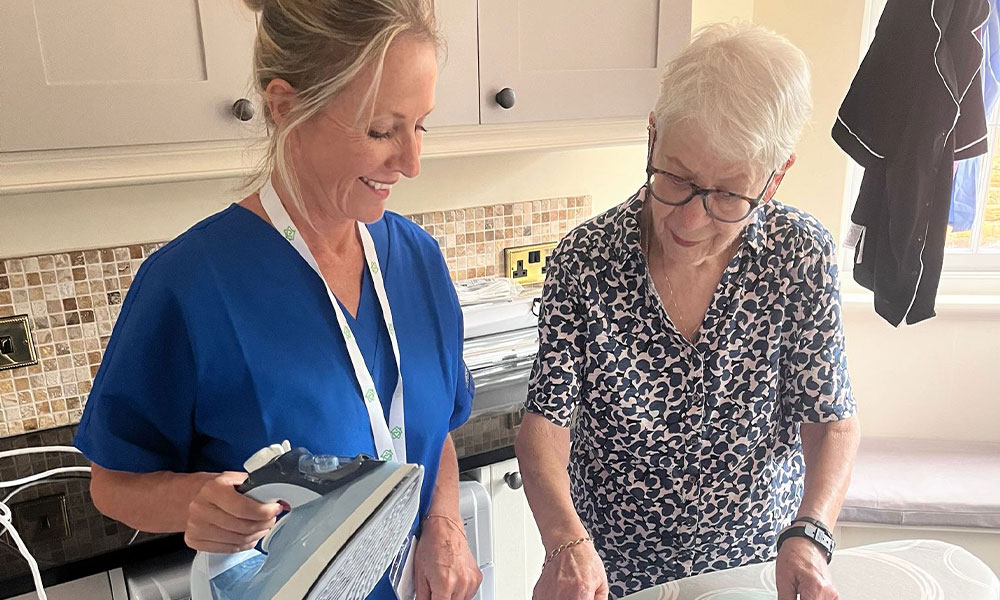
Personal care and daily routines
- Washing, showering, bathing and dressing
- Continence support and assessed personal-care routines
- Morning, evening and bedtime routines
- Nutrition, hydration and skin-care support recorded in the care plan
Personal support follows the person’s preferred routines and pace, with privacy and independence protected throughout the day.
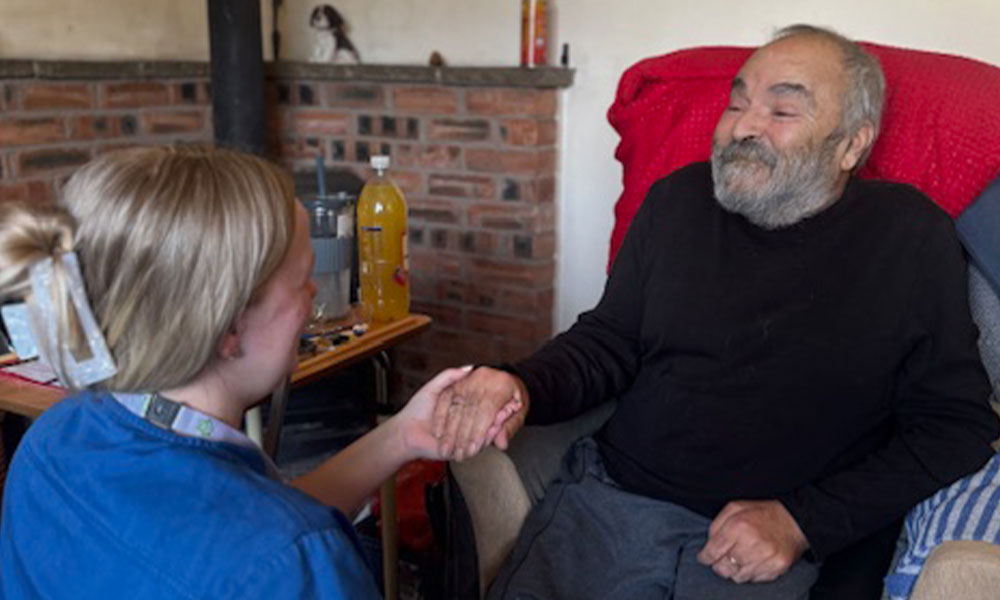
Medication and health routines
Competency-assessed practitioners can administer or assist with prescribed medication where it forms part of the care plan and risk assessment, including:
- Tablets, capsules and liquid medication
- Pharmacy-labelled packaging and monitored dosage systems
- Prescribed creams, patches, drops, sprays and inhalers
- PRN or controlled medication where the required written protocols and safeguards are in place
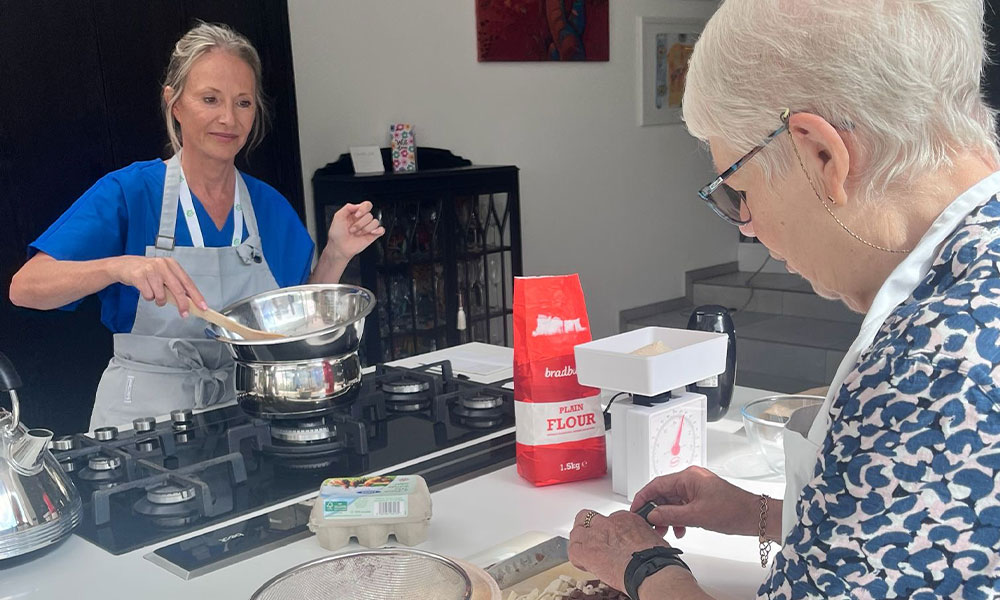
Meals and household support
- Planning and preparing preferred meals and drinks
- Monitoring and encouraging nutrition and hydration
- Light housekeeping, laundry and changing linen
- Shopping, errands and collecting prescriptions
Meals and household routines are agreed with the person, including preferences, dietary guidance and the parts of home life they wish to keep doing.
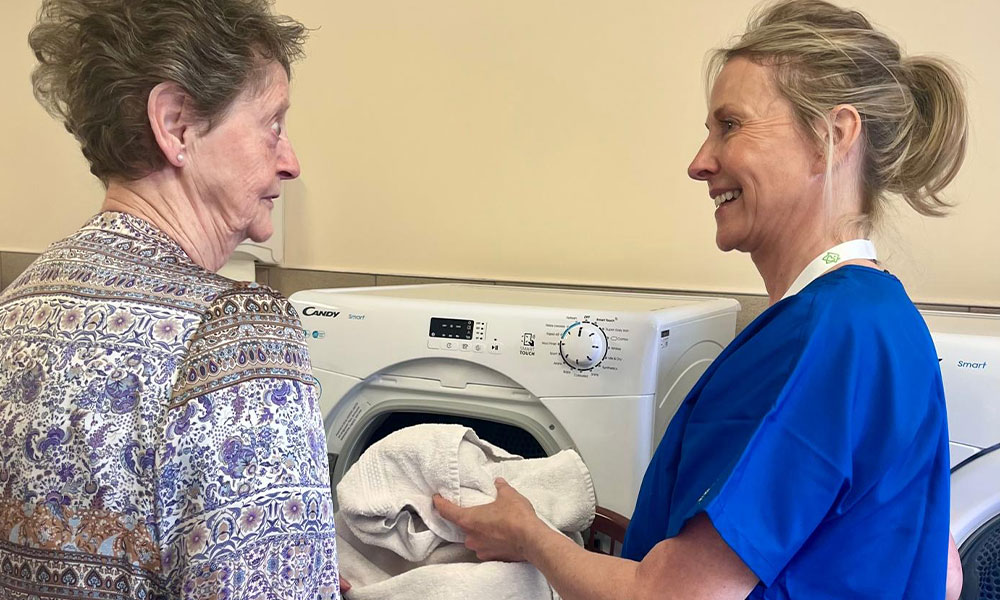
Companionship and everyday life
- Conversation, companionship and reassurance
- Support with hobbies, crafts and interests
- Help to maintain family, friendship and community connections
- Basic pet care where this is agreed within the care plan
Time together should feel natural and respectful, with space for conversation, shared interests, quiet company and time alone.
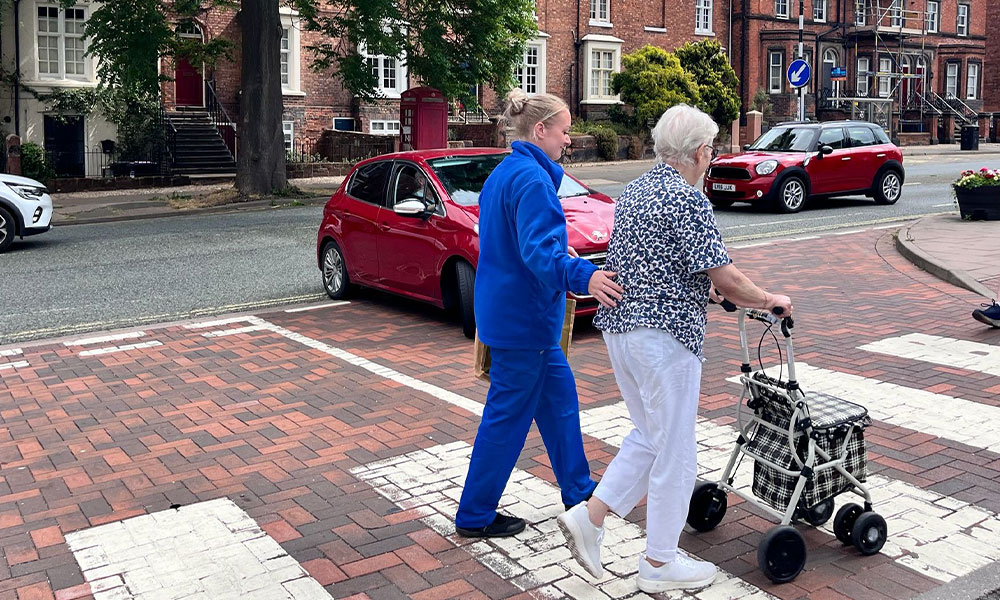
Mobility, appointments and community access
- Mobility support and assessed moving or hoisting equipment
- Support with agreed exercises or routines provided by healthcare professionals
- Arranging and attending medical or therapy appointments
- Accompanying someone on outings, shopping trips or social activities
Any equipment or exercise guidance must already have been assessed or recommended by the appropriate professional.
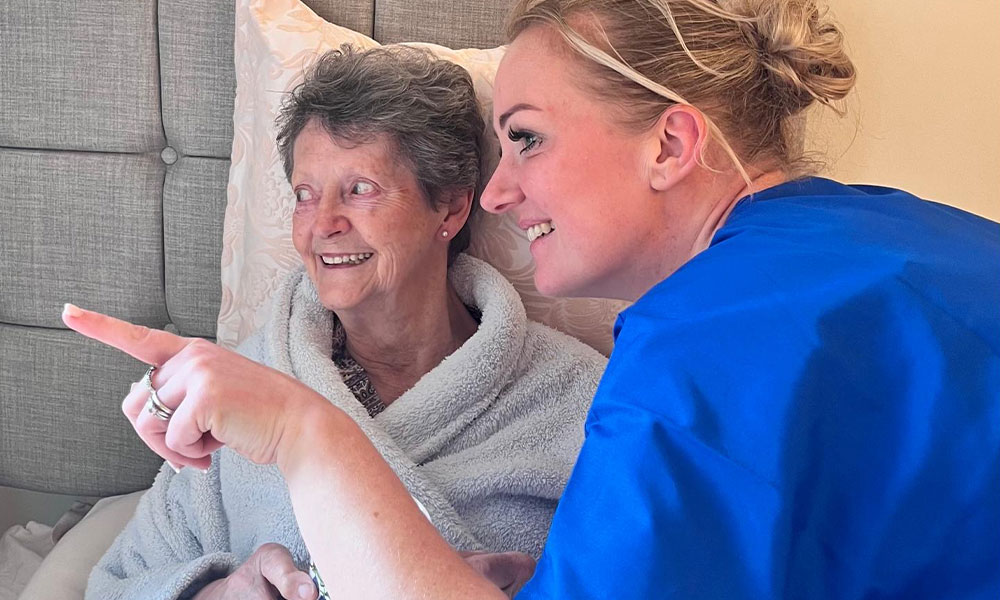
Night-time and higher-level support
- Occasional brief assistance during a standard live-in arrangement
- Sleeping-night support where the practitioner is expected to sleep but can assist occasionally
- Waking-night support where a practitioner remains awake and on duty
- Genuine 24-hour support delivered through a rota or shifts when continuous support is required
Understanding live-in, sleeping-night, waking-night and 24-hour care
Different arrangements for different levels of need
These terms should not be treated as interchangeable. The assessment must identify how much active support is needed during the day and night, and how the practitioner’s breaks and rest will be protected.

Standard live-in care
A live-in practitioner provides flexible support through the day around the person’s routine. There is no fixed number of active daytime hours.
A standard Live-in Care arrangement must include suitable breaks and sufficient overnight rest. Occasional agreed assistance may be possible, but more frequent or prolonged night-time support may require sleeping-night, waking-night or shift-based care.

Sleeping-night care
A sleeping-night practitioner remains in the home overnight and is expected to sleep, while being available for occasional assistance if required.
This may suit someone whose night-time routine is generally settled but who feels safer knowing support is nearby. The expected assistance, sleeping arrangements and response to changing needs are agreed during the assessment.

Waking-night care
A waking-night practitioner remains awake and on duty throughout the night. This may be appropriate where regular reassurance, observation or personal care is needed and uninterrupted sleep cannot reasonably be expected.
Support may include agreed help with repositioning, continence routines, mobility, medication or distress where these needs have been assessed and recorded in the care plan.

Genuine 24-hour support
Where continuous support is needed during both day and night, a genuine 24-hour package is normally delivered by two or more practitioners working through an agreed rota or shift arrangement. This protects safety, alertness and appropriate rest.
If night-time needs become more frequent or prolonged, the package should be reviewed rather than expecting one live-in practitioner to work without proper rest.
Other care options at home
Live-in Care is one arrangement, not the only route
Assessment may show that a lighter visiting package, temporary respite or a different form of support is more appropriate. These pages explain the other main CM Bespoke Care services.
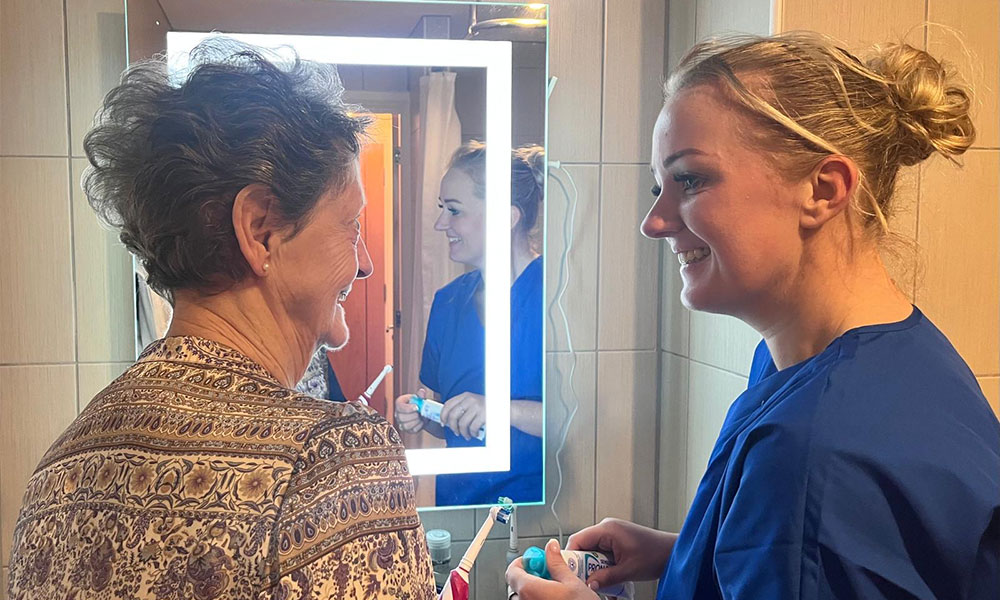
Home Care
Scheduled visits for personal care, medication, meals, companionship and everyday routines.
Respite Care at Home
Temporary support while a family, unpaid or regular carer takes a planned or necessary break.
Palliative Care at Home
Experienced domiciliary support alongside the appropriate clinical professionals during life-limiting illness.

Why choose CM Bespoke Care
Family-owned home care supported by clear systems and responsive management
CM Bespoke Care is family-owned and managed and has grown through recommendations and positive word of mouth. We combine personal relationships with structured training, secure digital care records, Registered Nurse oversight and a management team that remains closely involved once care begins.
Live-in Care arrangements are planned around more than practical tasks. The team considers personality, interests, communication style, routines, cultural and personal preferences, relevant experience, competencies, pets, the household environment and the type of relationship that may help the placement work well.

Our care team and standards
Thoughtful matching, clear oversight and ongoing support
- Approximately 100 care practitioners working across Shropshire, Worcestershire and surrounding areas
- A 2½-day induction combining classroom learning and practical training
- Shadow shifts before practitioners work independently
- Ongoing refresher training, observations, spot checks, supervisions and competency assessments
- A registered domiciliary care service rated Good by the Care Quality Commission
- Registered Nurse oversight where people have more complex needs
- Secure digital records and family-portal access where appropriate and consented
- A dedicated care manager who oversees quality, continuity, communication and package changes
Clinical procedures that require registered healthcare professionals remain outside the role of domiciliary care practitioners.

Reviews and lived experience
Real feedback from people and families
When someone is coming to live in the home, trust, compatibility and good communication matter from the very beginning. The independent reviews below share how clients and families have experienced CM Bespoke Care’s support and the way the team has worked alongside them.
Practical requirements for live-in care
A respectful home arrangement for the client and practitioner
A live-in practitioner requires suitable space, privacy and facilities so they can rest properly and provide safe, effective support.
The assessment will normally consider:
- A private bedroom with a suitable bed and adequate heating
- Access to bathroom, kitchen and washing facilities
- A safe working environment and suitable moving or care equipment where required
- Internet access where available for secure care recording and communication
- Agreed arrangements for meals, breaks, privacy and household expectations
- How holidays, planned time off and practitioner changeovers will be covered
The office team coordinates planned breaks, holidays and changeovers. Replacement practitioners receive a full handover and access to the current care plan before beginning.
Wherever possible, familiar practitioners are used to maintain continuity and reduce disruption.
How live-in care is arranged
A clear plan from the first conversation to ongoing reviews
You do not need to decide the complete arrangement before contacting us. The team will listen, explain the options and assess whether live-in care may suit the person and household.

Contact us
Tell us what is happening, who needs support, the home address, current routines, night-time needs and any important timescales.
Temporary or short-notice placements may sometimes be considered, subject to assessment and practitioner availability.

Free home assessment
A trained senior member of the management team normally visits the person at home. Most assessments take 60 to 90 minutes, although there is no fixed limit.
The assessor considers care needs, risks, routines, the home environment, practitioner accommodation, breaks and what a successful placement would look like.

Personal care plan and matching
The plan is developed with the client and, where appropriate, their family and healthcare professionals.
CM Bespoke Care then considers skills, experience, personality, communication and household compatibility when identifying suitable practitioners.

Care begins and stays under review
The practitioner receives a full handover and access to the current care plan before the placement begins. A dedicated care manager oversees quality, continuity, breaks, communication and changes.
Care plans are formally reviewed at least monthly and whenever needs or circumstances change.
Live-in Care or a care home
The right setting depends on the person, not a sales slogan
Live-in Care can offer an alternative to moving into residential care for some people, but neither option is automatically safer, better or less expensive. The decision should reflect the person’s wishes, capacity and consent, assessed needs, clinical requirements, home suitability, social preferences, family circumstances, cost and current availability.
CM Bespoke Care can assess whether its own Live-in Care service may be suitable. It does not decide that a person must remain at home or move into care, and it does not replace independent clinical, social-work, legal or financial advice where those are needed.
Live-in Care at home
- The person remains in their own home and familiar surroundings
- Support is organised around an individual or couple’s care plan
- Existing routines, pets, relationships and community connections may be easier to maintain
- The home must be suitable and a private bedroom and appropriate facilities must be available
- Night-time and continuous-cover needs may require additional practitioners or a different package
Residential or nursing care
- Staff and shared facilities are available within a supported setting
- Communal activities and contact with other residents may appeal to some people
- The care model may suit needs or preferences that cannot be met safely in the person’s home
- A nursing home can provide registered nursing as part of its service where required
- Location, room availability, costs and the particular home’s services still need careful comparison
Live-in care across our service area
Placements considered across Shropshire, Worcestershire and Herefordshire
CM Bespoke Care considers live-in care based on the person’s needs, property suitability, location, the required competencies and an appropriately matched practitioner being available.
Live In Care in Shropshire
Live In Care in Worcestershire
Live In Care in Herefordshire
Our offices supporting Shropshire, Herefordshire and Worcestershire
Care management and planning from two established offices
CM Bespoke Care's Cleobury Mortimer head office and Church Stretton office support enquiries, practitioner coordination and care management across our service area.
Ground Floor Office Suite, Upper Baveney Park, Cleobury Mortimer, Kidderminster, Shropshire, DY14 8LF
Unit 1, Sandford Court, Sandford Avenue, Church Stretton, Shropshire, SY6 6BH
Frequently asked questions about live-in home care
Talk to our team about Live-in Care
Tell us about the person, the home, current support, night-time needs and what is becoming difficult.
You do not need to know whether standard live-in, waking-night or 24-hour care is required before contacting us.
Our team will listen, explain the options and help you decide whether a free home assessment is the right next step.