





More continuous support without leaving home
A managed care arrangement shaped around the person and household
When help is needed at several points across the day, or routines no longer fit comfortably between scheduled visits, Live-in Care can provide a steadier presence. A trained practitioner lives in the home and supports the person according to an agreed plan, while familiar rooms, relationships and everyday choices remain part of daily life.
Live-in Care is a managed form of support at home. The practitioner becomes part of the household rhythm while retaining suitable accommodation, privacy, breaks and overnight rest. The care plan also makes clear when a different night-care arrangement would be safer.
CM Bespoke Care has practitioners working around Leintwardine and nearby border communities. Families in Bromyard and surrounding villages are also welcome to get in touch while the local service develops. The team will listen to what is needed and explain honestly whether a suitable practitioner and dependable arrangement can be put in place.
Live-in Care in Herefordshire at a glance
- Free, no-obligation home and care assessment
- One-to-one support within familiar surroundings and routines
- Temporary or ongoing arrangements planned around the household
- Thoughtful matching, managed cover and regular care-plan reviews
- Practitioners already working around Leintwardine and nearby border communities
- Bromyard-area enquiries welcomed as the local service develops
- CQC-rated Good homecare service
Who may benefit from Live-in Care
Support for people who want to remain part of their home and community
Live-in Care may suit adults with different health conditions, disabilities and family circumstances. Suitability depends on more than a diagnosis: the assessment considers what the person wants, what they can continue doing, the help required and whether one practitioner living in the home can meet the plan safely.
People and circumstances
- An older person who wants to remain in familiar surroundings
- An adult managing a disability, increasing frailty, mobility challenges or an ongoing health condition
- Someone with dementia or Parkinson's who may value greater continuity
- A person rebuilding confidence and routines after illness, surgery or hospital treatment
- Someone living alone whose needs arise at different points throughout the day
- A couple hoping to stay together, where both care plans can be supported safely
- A family whose present caring arrangement is becoming difficult to sustain
- Relatives organising support from outside Herefordshire or across the county border
The practitioner supports the person's abilities and choices rather than replacing everything they can still do for themselves.
Signs that a conversation may help
- Essential needs are regularly arising between visiting-care calls
- Personal care, meals, medicines or mobility need support at several times each day
- Long periods alone are creating worry, confusion or distress
- Night-time assistance is becoming more frequent than a family carer can manage
- A partner or relative is exhausted, unwell or no longer able to provide the same support
- The person wants to explore staying at home before considering residential care
- A return from hospital requires a more dependable daily arrangement
- Repeated journeys to a rural home make fragmented support difficult to coordinate
These changes do not automatically mean that Live-in Care is required. They provide a useful starting point for discussing day and night needs, clinical input, property suitability and other realistic options.
What Live-in Care in Herefordshire can include
A flexible plan for personal care, practical support and everyday life
No two households need care in exactly the same way. The assessment identifies the tasks, timing, preferences and professional boundaries that should be recorded, then brings the appropriate elements together within one clear plan.
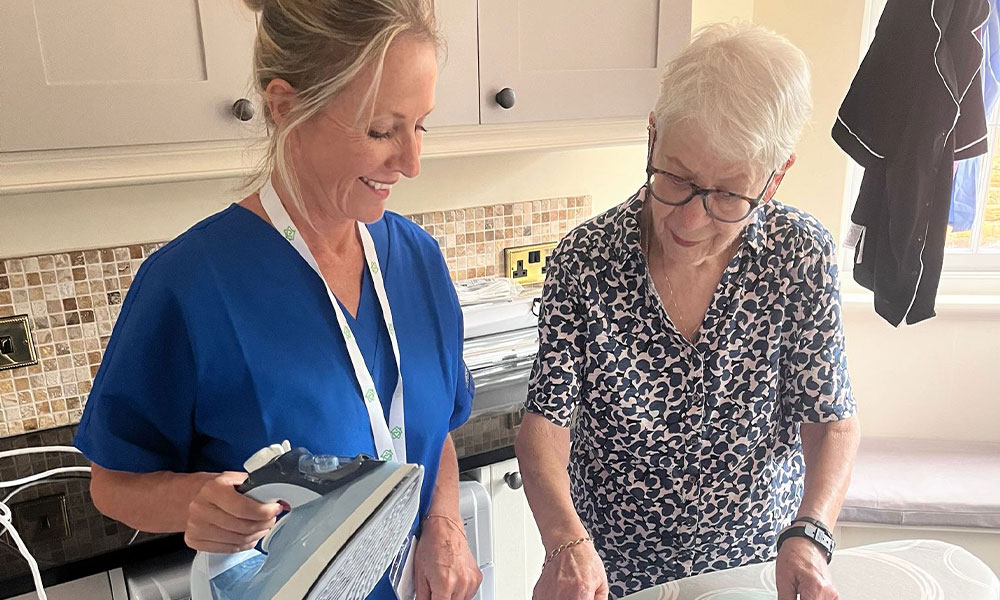
Personal care and familiar routines
- Assistance with washing, bathing, dressing and grooming
- Planned support with toileting and continence care
- Help with getting up, settling for the evening and preparing for bed
- Skin-care actions that have been agreed within the care plan
- Encouragement that keeps the person involved in their own routine
Care is provided with dignity and at the person's pace, allowing established preferences to guide how support feels within the home.
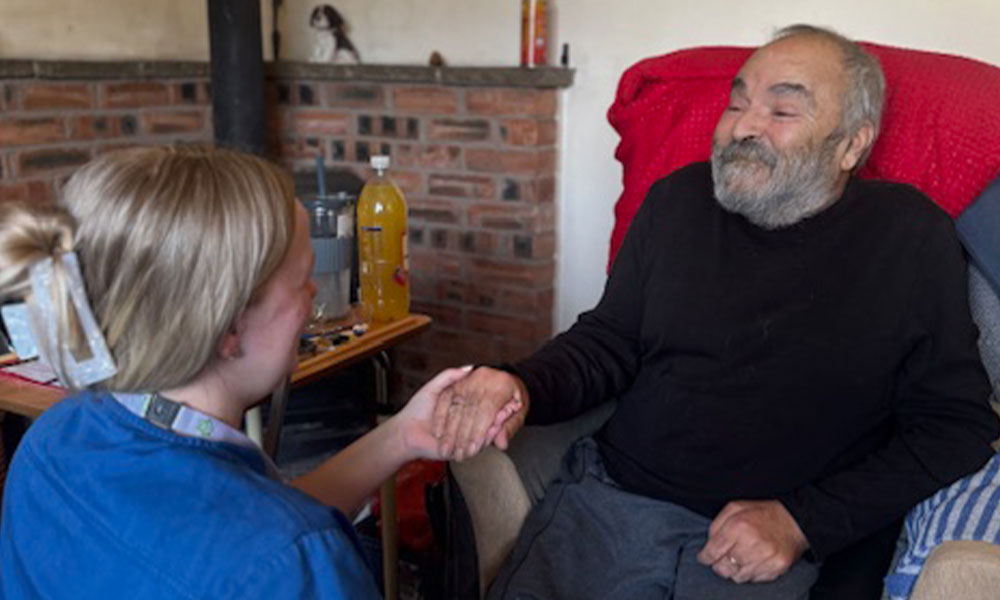
Medicines and health-related routines
- Medication prompting, practical assistance or administration following an appropriate assessment
- Help with prescribed tablets, liquids, creams, patches, drops, sprays or inhalers
- PRN and controlled medicines where the required protocol is established
- Accurate medication records within the secure care system
- Prompt reporting of missed doses, refusals, delays or emerging concerns
Practitioners follow the assessed medication plan and their confirmed competence. Prescribing, dose changes and clinical decisions stay with the responsible healthcare professional.
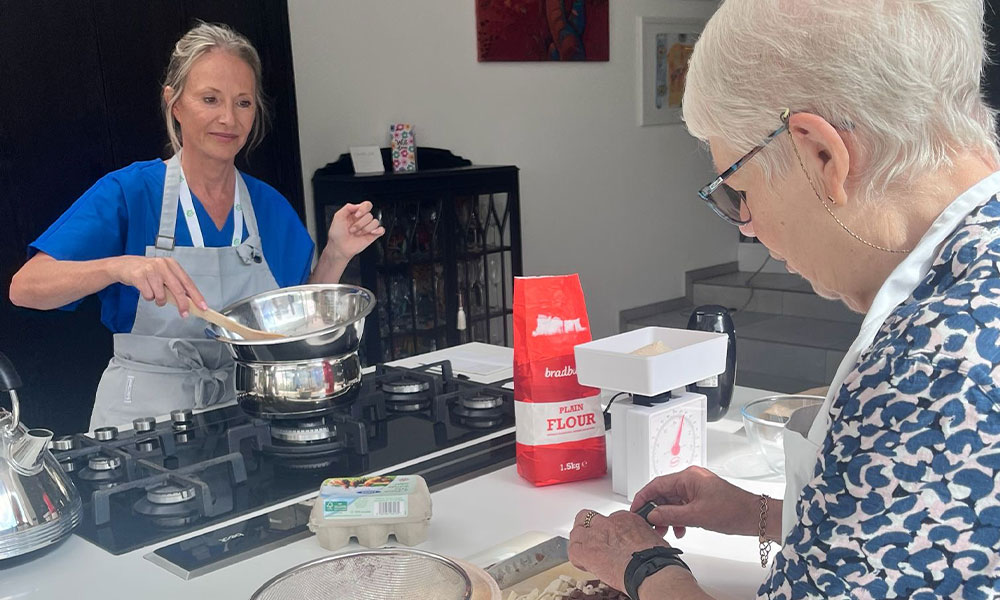
Food and household life
- Preparing meals, snacks and drinks the person enjoys
- Following recorded dietary, allergy and texture requirements
- Shopping for agreed groceries, prescriptions and household essentials
- Light cleaning, laundry and changing bedding
- Agreed everyday tasks relating to pets
Practical help is planned to keep the household comfortable and familiar, with the included tasks and reasonable boundaries agreed from the outset.
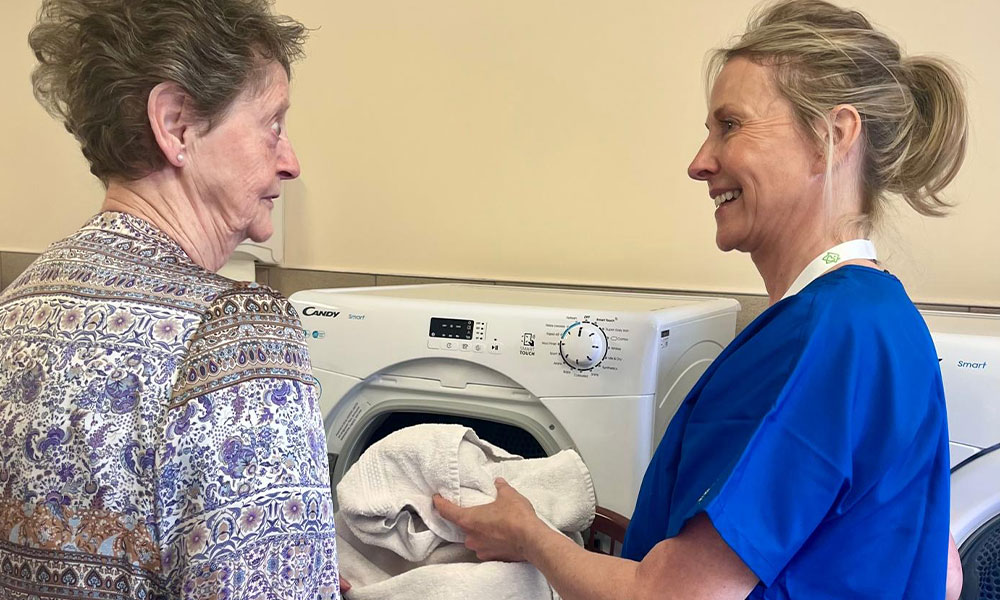
Companionship and chosen activities
- Conversation and reassuring company through the day
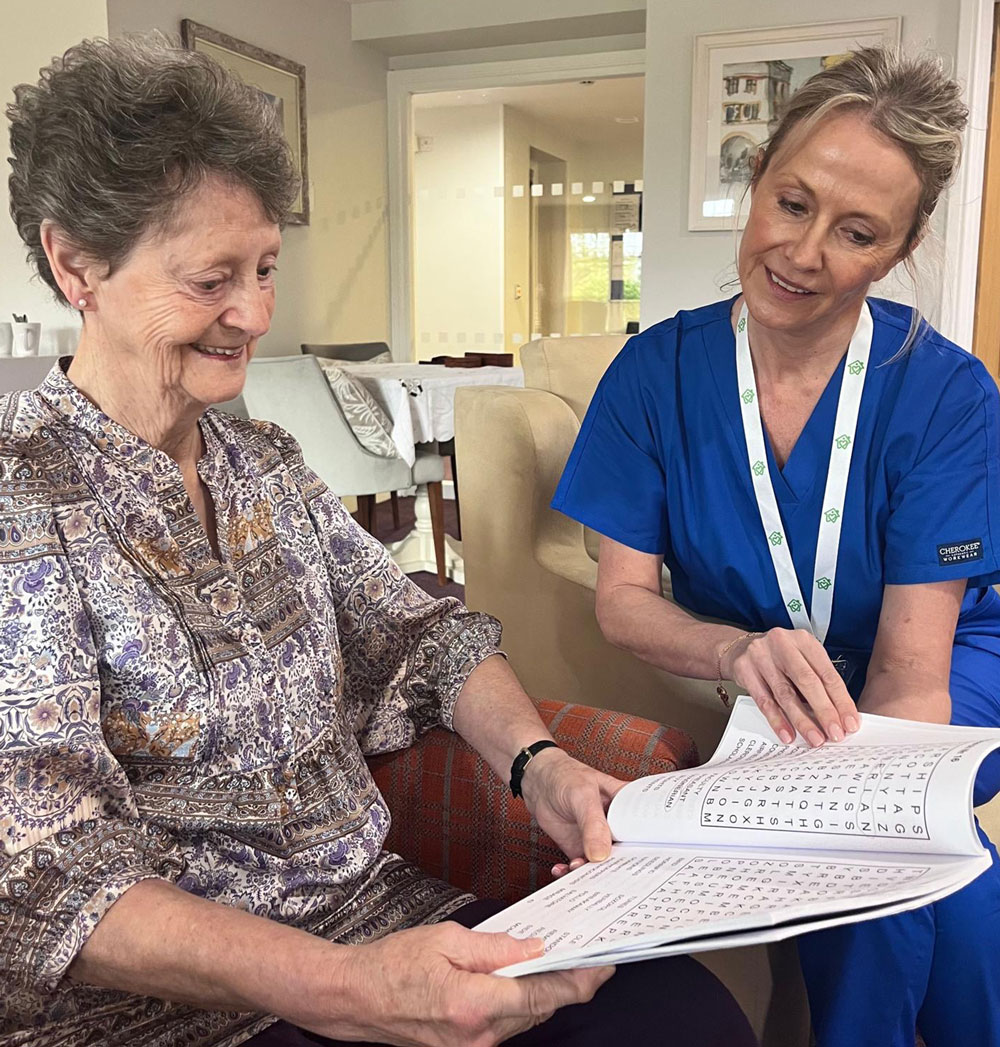
- Shared music, reading, games, crafts or other interests
- Support to maintain contact with relatives and friends
- Help to take part in agreed community or social activities
- Respect for quiet time, privacy and independent choices
Companionship should feel natural rather than constant. The practitioner can share meaningful time while recognising when the person wants space of their own.
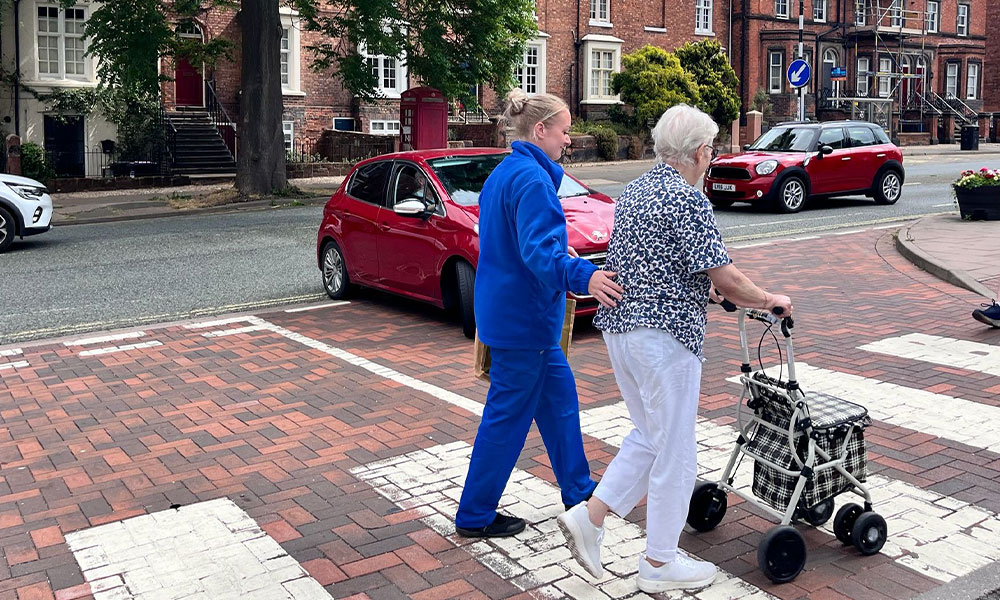
Mobility, appointments and time outside
- Assessed help with moving, positioning and transfers
- Use of suitable equipment by practitioners confirmed as competent
- Accompaniment to healthcare, therapy and personal appointments
- Support with planned shopping, visits and local outings
- Following mobility guidance from the appropriate professional
Any equipment or exercise programme must be assessed or recommended through the relevant clinical or professional route before it becomes part of care.
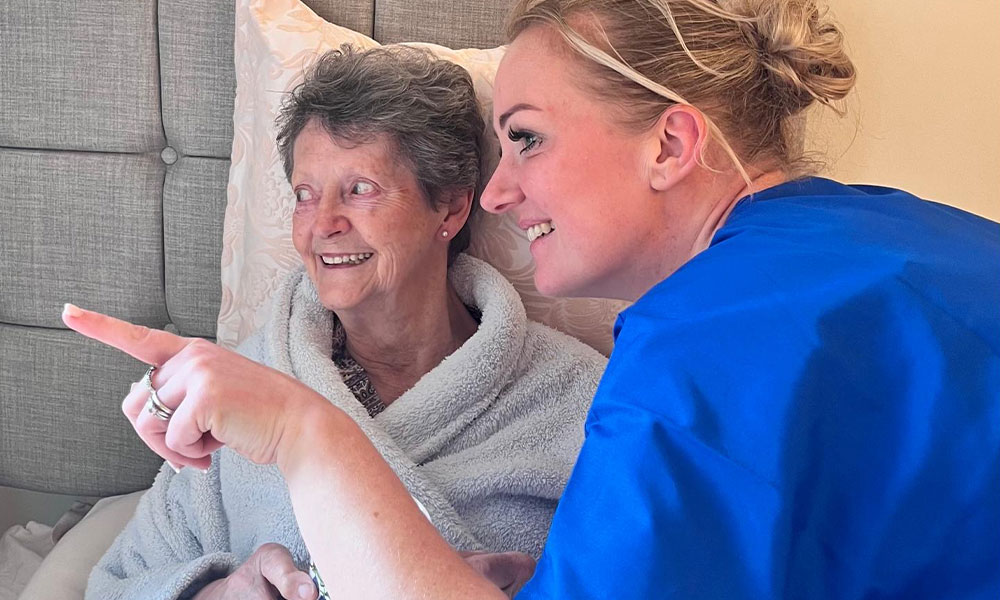
Night-time and higher-level support
- Occasional brief assistance within a standard live-in plan
- Sleeping-night care where the practitioner is expected to rest
- Waking-night care with a practitioner awake and on duty
- Genuine 24-hour support delivered through an appropriate rota or shifts
The assessment considers how often help is active overnight and plans additional staffing when one practitioner could not receive the rest they need.
Understanding the available day and night arrangements
The right model depends on when support is active and when rest is possible
A standard live-in package, sleeping-night care, waking-night care and genuine 24-hour support are not interchangeable. The assessment looks at the person's daytime routine, the frequency of overnight needs and whether one practitioner can receive the breaks and sleep required.

Standard Live-in Care
The practitioner lives in the home and provides flexible daytime support around the agreed routine. Proper breaks and overnight sleep remain essential, although occasional brief assistance may form part of the plan.

Sleeping-night care
A sleeping-night practitioner stays in the property and is expected to sleep. They remain available for occasional agreed help where the pattern still allows the rest on which this arrangement depends.

Waking-night care
The practitioner remains awake and working throughout the night. This may suit regular reassurance, observation, repositioning or personal-care needs that cannot be managed within a sleeping night.

Genuine 24-hour support
Continuous active cover normally requires two or more practitioners working through an agreed rota or shifts. It should not rely on one live-in practitioner remaining responsible without adequate rest.
Planning Live-in Care in Herefordshire
Rural distance matters differently when the practitioner lives in the home
CM Bespoke Care already supports people around Leintwardine and nearby border communities. Families in Bromyard and surrounding villages are also welcome to enquire; because the local service is still developing, the team first confirms that a well-matched and dependable arrangement can be put in place.
- A practitioner living in the property reduces the need for several separate care-round journeys each day
- Assessment visits, practitioner travel and planned changeovers must still be reliable
- Homes near Leintwardine may involve cross-border routes and professionals based in different local systems
- Bromyard-area enquiries depend on matching, capacity and a workable start rather than an assumed local round
- Access, parking, connectivity and weather-sensitive rural journeys may affect practical planning
- The private bedroom, shared facilities and household arrangements are assessed alongside care needs
- Regular waking or continuous night support may require additional staffing rather than one practitioner working without rest
Every enquiry is considered individually. The first conversation can cover the general location, household, support required and preferred timing before the team confirms whether a dependable arrangement can be explored.
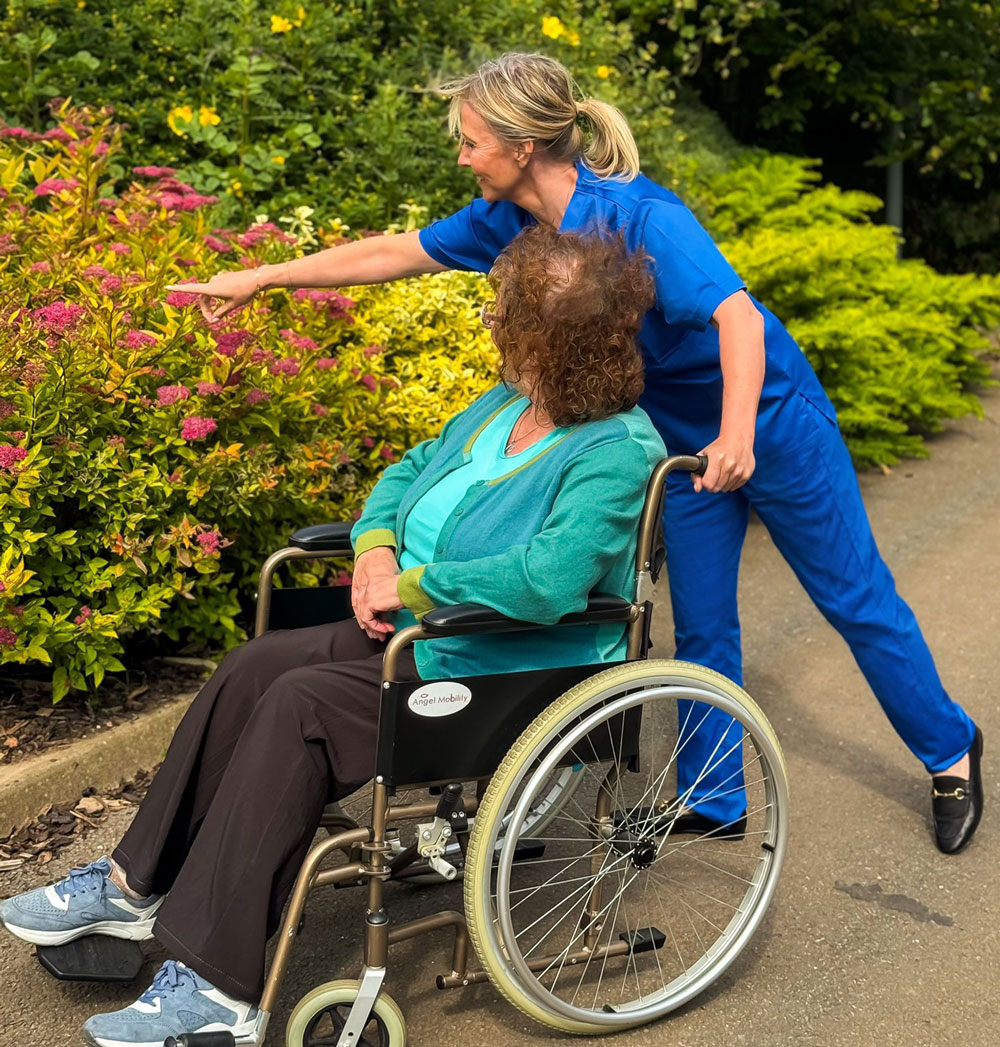
Planning care alongside Herefordshire health and support services
Different organisations can contribute without their responsibilities becoming blurred
The person may already be speaking with a hospital discharge team, GP, district nurse, therapist, Herefordshire Council or another professional service. With consent, CM Bespoke Care can record relevant contacts and work within the agreed domiciliary care plan, while each organisation remains accountable for its own decisions.
Returning home after hospital or rehabilitation
Hereford County Hospital is the principal acute hospital in the county. Bromyard, Leominster and Ross-on-Wye community hospitals may also support rehabilitation or recovery before a person is ready to return home.
A Live-in Care package may help restore personal routines, meals, prescribed medication support, mobility and reassurance after discharge. It can begin only when the discharge arrangements, required equipment, clinical responsibilities, home assessment and suitable practitioner availability are in place.
District nursing and other community care
Wye Valley NHS Trust district nurses provide referral-based clinical nursing in people's homes across Herefordshire. A district nurse, GP or therapist may therefore remain involved while CM Bespoke Care provides the agreed personal and practical support.
The live-in practitioner can observe, record and report concerns through the correct route, but does not replace registered nursing, therapy or medical treatment.
Assessments and short-term support routes
Herefordshire Council's Advice and Referral Team is the first contact for new Adult Social Care enquiries and statutory assessment routes. Its care, carer and financial assessments are separate from CM Bespoke Care's free provider assessment.
Home First is the council's short-term reablement service for eligible people after illness, a fall, hospital treatment or another change in circumstances. It is not the same service as privately arranged Live-in Care, although a family may consider longer-term options as short-term support approaches its end.
NHS professionals remain responsible for clinical treatment and nursing.
Herefordshire Council manages its statutory assessment and reablement routes.
CM Bespoke Care manages the personal and practical care agreed within its own Live-in Care plan.
An initial conversation with CM can identify what the family wishes to arrange privately and which questions still belong with the hospital, council or NHS team.
Herefordshire Council Adult Social Care
Herefordshire Home First reablement
Other ways to arrange care at home in Herefordshire
Needs may call for visiting, temporary or palliative support
A live-in arrangement is only one option. The assessment may show that scheduled Home Care visits, replacement care for a family carer or palliative support delivered alongside healthcare professionals would be more proportionate.
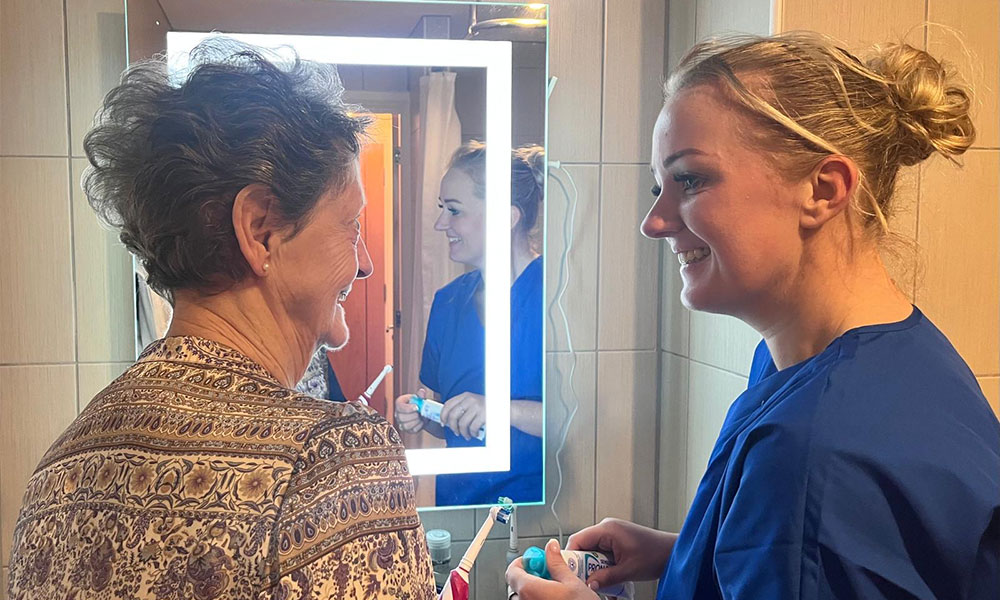
Home Care in Herefordshire
Planned visits can provide personal care, medication support, meals, companionship and help with daily routines at agreed times.
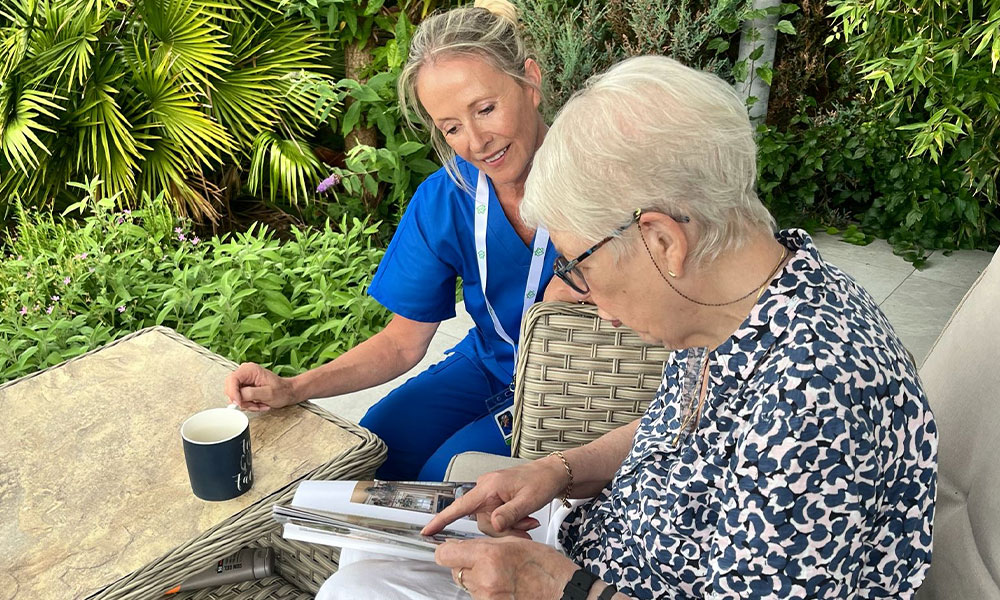
Respite Care at Home in Herefordshire
Temporary visiting, overnight or live-in support can help a family or regular carer take a planned or necessary break.
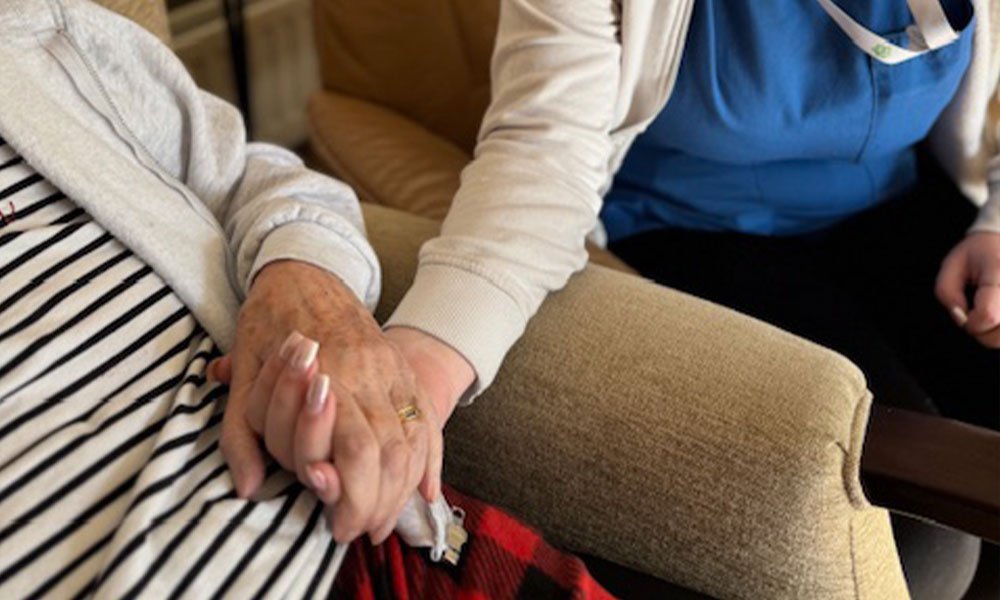
Palliative Care at Home in Herefordshire
Personal and practical care can support comfort and familiar routines alongside the clinical and specialist teams already involved.

Why choose CM Bespoke Care in Herefordshire
Family-managed care with responsibility that remains clear
CM Bespoke Care is family-owned and managed. Its practitioners already support people around Leintwardine and nearby border communities, and the wider team welcomes Herefordshire enquiries with an honest, personal conversation about what can be arranged safely and reliably.
Assessment, care planning, practitioner management, records, reviews, cover and communication remain part of one managed service. Clients and families therefore have a defined care-management route when needs, arrangements or concerns change.

The people supporting each Live-in Care arrangement
Care skills, household compatibility and continuing oversight
Living in the same home calls for more than the right task-based competencies. Matching also considers communication, personality, routines, interests, cultural and personal preferences, pets and how travel or changeovers can be managed for the person's part of Herefordshire.
Each package is supported through:
- A wider workforce of approximately 100 care practitioners across Shropshire, Worcestershire and surrounding areas
- A 2½-day induction combining classroom and practical learning
- Shadow shifts before practitioners begin working independently
- Refresher training, observations, supervision, spot checks and competency assessment
- A registered domiciliary care service rated Good by the Care Quality Commission
- Access to Registered Nurse guidance when more complex needs call for additional oversight
- Secure digital care plans, medication records, daily notes and observations
- A dedicated care-management route and seven-day on-call support for active packages
- Reviews at least monthly and sooner whenever needs or circumstances change
- Planned practitioner cover, handovers, breaks and changeovers
Experiences shared by clients and families
Independent feedback about care, communication and reliability
Welcoming a practitioner into the home depends on trust and a sense that the person will be listened to. The reviews below share how clients and families have experienced CM Bespoke Care’s personal support, communication and reliability.
Making the household suitable for Live-in Care
Comfort, privacy and practical arrangements for both people
A suitable private bedroom, bed, heating and storage are essential. The practitioner also needs reasonable access to bathroom, kitchen and laundry facilities, with meals, privacy, rest and safe working conditions agreed.
The home assessment considers:
- The bedroom and facilities shared within the household
- Road access, parking and the safety of the property
- Phone or internet connectivity where this affects the arrangement
- Pets, visitors, relatives and established household routines
- Food, breaks, privacy and time away from active duties
- Driving, appointments and any proposed use of a vehicle
- Mobility equipment and instructions from responsible professionals
- Travel, practitioner changeovers, holidays and contingency cover
Food, travel, driving and household costs are agreed for the individual package rather than assumed.
Arranging Live-in Care in Herefordshire
From an initial conversation to a supported household arrangement
You do not need to prepare a complete care specification before contacting the team. Begin with what is happening now, what the person wants to continue doing and the general area in which support would be required.

Start with a conversation
We will listen to the person's circumstances, present care, day and night needs, household, preferred timing and any relatives or professionals already involved. The team can also explain how the local coverage position affects the next step.

Free assessment at home
A senior team member explores abilities, needs, preferences and risks. The assessment also considers the bedroom, facilities, access and working arrangements required for a practitioner living in the property.

Plan the care and practitioner match
The written plan records personal care, medicines, mobility, communication, overnight needs, professional responsibilities and household expectations. Matching considers competencies, compatibility, travel and sustainable changeovers.

Begin with management and review in place
The practitioner receives an appropriate handover and the care manager remains involved with communication, records, cover and changing needs. Formal reviews take place at least monthly, with earlier review whenever required.
Live-in Care or a residential setting in Herefordshire
Different environments can meet different combinations of need
A live-in practitioner may allow someone to remain at home with consistent one-to-one support. Residential or nursing care may be more appropriate where the person wants a communal setting or requires facilities, staffing or registered nursing that cannot be arranged safely in their present home.
The decision should consider the person's wishes, consent and capacity, assessed risks, active night-time needs, home suitability, social preferences, family circumstances, costs and realistic availability. CM Bespoke Care can explain whether its own service may be suitable without presenting one setting as automatically better.
Live-in Care at home may offer:
- Daily life within rooms and surroundings the person recognises
- A one-to-one plan for one person or, where appropriate, a couple
- Continued contact with familiar people, pets and community connections
- Personal choices around meals, visitors and the pace of the day
- Managed care without moving into shared accommodation
Residential or nursing care may offer:
- A purpose-designed environment with staff based on site
- Communal activities and contact with other residents
- Facilities suited to some combinations of risk and dependency
- Registered nursing where this forms part of the chosen nursing-home service
- An alternative where the current property cannot support the required care safely
Live-in Care coverage in Herefordshire
Established border-area support and carefully assessed new enquiries
CM Bespoke Care has an established service context around Leintwardine and nearby communities such as Bucknell and Wigmore, where practitioners already work locally. Bromyard and surrounding villages are treated as a growth area: enquiries are welcome, but the team does not imply that a dedicated local practitioner or immediate package is already available.
Live-in Care can reduce reliance on repeated daily journeys because the practitioner is based in the household. Assessment visits, property access, matching, practitioner travel, breaks and changeovers still have to work reliably, especially for dispersed homes and border routes.
The team will discuss the general location, the person or couple, property suitability, required competencies, day and night needs and hoped-for timing. It will then confirm whether the enquiry can move forward to a safe and dependable plan.
Our offices supporting Herefordshire enquiries
Care management and planning from two established offices
CM Bespoke Care's Cleobury Mortimer head office and Church Stretton office support enquiries, practitioner coordination and care management for the parts of Herefordshire the service can cover.
Ground Floor Office Suite, Upper Baveney Park, Cleobury Mortimer, Kidderminster, Shropshire, DY14 8LF
Unit 1, Sandford Court, Sandford Avenue, Church Stretton, Shropshire, SY6 6BH
Frequently asked questions about Live-in Care in Herefordshire
Talk to us about Live-in Care in Herefordshire
Tell us what has changed, what support is needed and what the person would like to preserve about life at home.
We can discuss the general location, household, day and night needs, timing and any professionals already involved.
You do not need to decide on the care format first.
The team will explain the relevant options and, where the enquiry can be supported, arrange a free assessment as the next step.