



Finding help with home care costs in Shrewsbury
Start with what would make everyday life more manageable
Looking into home care in Shrewsbury often brings two questions together: what support would help, and how will it be paid for? You may be planning a few visits each week, arranging help after illness, or finding that a relative’s needs have changed. It helps to consider both questions without assuming that you must settle every financial detail before asking for advice.
For someone living in Shrewsbury, Shropshire Council is the starting point for exploring council care assessments. Other services can help with benefits, recovery or the needs of an unpaid carer. Several cover a wider area than the town, which is why you will see Shropshire-wide organisations in this guide. Give your postcode when making an enquiry so the team can confirm the right service for you.
At CM Bespoke Care, we want you to understand the available choices as well as the care we provide. Here, we bring together useful local contacts, explain the different jobs they do and suggest questions to ask. Advice may help you find an appropriate source of support, but a conversation or assessment does not automatically lead to funded care.
You can use this guide on its own to choose a starting point. For more detail about national charging rules, benefits and comparing care costs, read our guide to paying for home care. Keep the person receiving support involved throughout, including what matters to them and who they would like to help with enquiries.
Home care funding in Shrewsbury at a glance
- Start with your needs: explain which daily tasks are difficult and what help is already in place.
- Ask the right council team: Shropshire Council’s First Point of Contact handles initial adult social care enquiries.
- Separate the assessments: your care needs and your financial contribution are considered in different assessments.
- Check local advice: benefits and money guidance may be useful even if you expect to pay privately.
- Clarify temporary support: find out exactly what is being offered after illness or hospital, including any charges.
- Include the family carer: their health, time and need for support matter too.
Who can help with home care funding and support?
Choose the starting point that matches your question
You do not need to work through every service in a fixed order. These six routes address different questions, and more than one may be useful. An advice service, an assessment team and a care provider each have a different role.
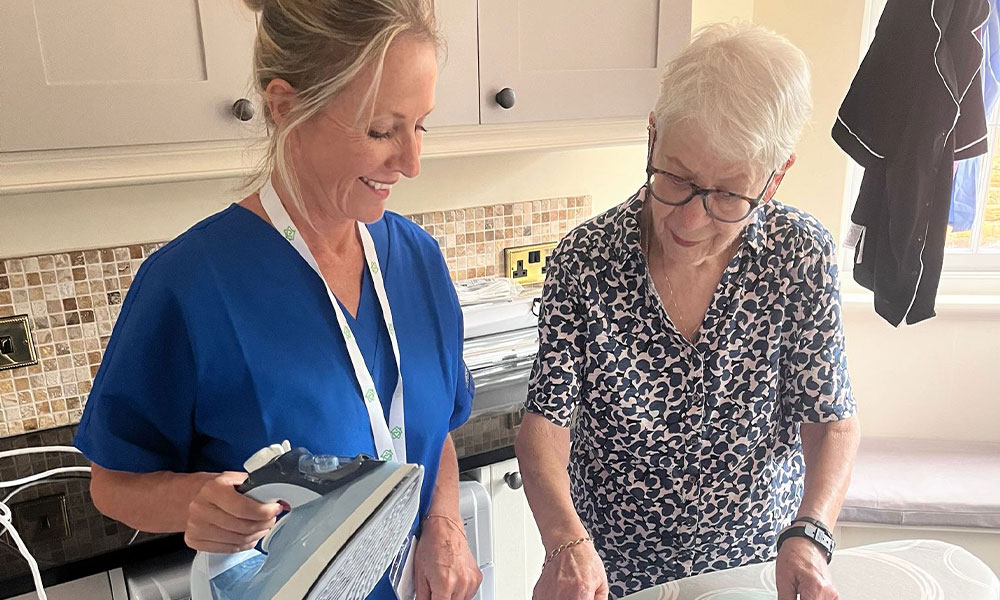
When everyday tasks are becoming difficult
Start with Shropshire Council’s First Point of Contact and explain the help you may need.
- Ask about a care needs assessment.
- Describe existing support and any gaps.
- Explain if the situation is changing quickly.
The assessment helps establish what support may be appropriate.
When you want to understand a possible contribution
The council’s online contribution calculator can give an initial indication of what you might pay towards council-arranged care.
- Have financial information available.
- Check the assumptions you enter.
- Ask the council how to confirm the result.
An estimate is not a funding decision or a private care quote.
When you are unsure about benefits
Local advice may help you understand possible entitlements and the information needed for a claim.
- Age UK offers benefits advice for people over retirement age.
- Citizens Advice provides a Shrewsbury contact route.
- Ask what documents to bring or send.
The local contact details and access arrangements are explained below.

When you are recovering after illness
Ask the professionals involved whether recovery support or Shropshire’s START service may be appropriate.
- Describe what has become harder at home.
- Ask what service is being proposed.
- Clarify any charges and the review plan.
Short-term support can involve different arrangements; check the details.
When there are complex ongoing health needs
Ask the health professionals involved whether NHS Continuing Healthcare should be considered.
- Explain the care needed during the day and night.
- Ask about the assessment process.
- Keep relevant care information together.
The NHS assesses eligibility; a diagnosis alone does not decide it.
When caring is affecting your own life
Shropshire Carers offers advice and support to adult family and unpaid carers.
- You can contact the team yourself.
- Explain the impact on your daily life.
- Ask about advice and planning ahead.
You can seek support for yourself as well as for the person you care for.
Asking Shropshire Council about help with home care
Understand your support needs and the financial arrangements
A care needs assessment looks at daily life and the support you may need. A financial assessment considers what you may have to contribute towards council-arranged support. Understanding the difference makes it easier to ask the right questions.
Requesting a care needs assessment
Describe the things that have become difficult, rather than trying to decide your own eligibility.
Contact Shropshire Council’s First Point of Contact on 0345 678 9044. Explain that you live in Shrewsbury and would like to discuss a care needs assessment. Tell the adviser about any immediate difficulties, recent changes or support that is about to end.
Prepare a few examples from a typical week: washing, dressing, preparing food, moving around or maintaining important routines. Include help already provided by family or friends and what they can realistically continue to do. Shropshire Council’s Care Act assessment guidance explains how the conversation considers your needs and desired outcomes.
Paying privately does not prevent you from asking for a free assessment. The council’s guidance for people paying for their own care also explains help with arranging eligible home care; a brokerage fee can apply. Ask about the current terms before choosing that arrangement.
After the assessment, ask for the outcome in writing and an explanation of the next steps. If it does not reflect your situation, identify what is missing and ask how to have it reconsidered.
Understanding your financial assessment
Ask what you may need to pay, how it has been calculated and which information is required.
Shropshire Council’s financial assessment guidance explains that the council considers income and capital, including savings and some assets. Care at home and a permanent care-home placement have different rules. Low savings alone do not establish that all care will be free.
The Shropshire contribution calculator offers an estimate for council-arranged care. It does not assess your care needs or tell you a private provider’s charges. If you cannot use it, or are unsure about an entry, ask the council for help with the assessment process.
Gather information about income, benefits, savings and relevant expenses. Ask the assessor which documents they need and how to provide them securely. Check how disability-related costs and essential living expenses have been considered, rather than assuming a calculator entry settles every detail.
Request a written calculation and ask about anything you do not understand. Our home care costs and funding guide explains the wider rules; the council can clarify how its assessment applies to your circumstances.
Getting benefits and money advice in Shrewsbury
A local adviser can help you work out what is worth checking
You do not have to know which benefit to ask about before seeking advice. Explain the person’s age, circumstances and day-to-day support needs, along with any benefits already received. An adviser can discuss options such as Attendance Allowance, Personal Independence Payment (PIP) or Pension Credit where relevant, and explain how a claim could affect existing payments.
Age UK Shropshire Telford & Wrekin’s benefits service offers free, independent and confidential advice for people over retirement age. It can help with entitlement checks, forms and benefit problems. Call 01743 233123 to ask about support; the service also describes home visits for form completion, subject to arrangements with the team.
For another local starting point, contact Citizens Advice Shropshire’s Shrewsbury office on 0808 278 7894. Its official listing says there is no public drop-in access: call to discuss advice and arrange a face-to-face appointment where appropriate. Check access arrangements before travelling.
Take any decision letters and relevant dates to the conversation, especially if you disagree with a benefits decision. If someone helps you with a form, make sure the answers reflect your actual circumstances. These organisations provide advice; the relevant authority decides whether a benefit or funding award is payable.

Support after illness and NHS funding in Shropshire
Check which arrangement is being discussed
Help to regain everyday skills and funding for complex ongoing health needs follow different processes. Ask the team involved to explain the purpose of the proposed support, who arranges it and whether any charges apply.
Reablement and the local START team
Recovery support may help you regain skills and confidence after illness, injury or a hospital stay.
Shropshire’s Short Term Assessment and Reablement Team is known as START. Reablement may involve practising everyday activities and finding ways to manage them more independently. Ask the discharge team, GP surgery or council whether an assessment for recovery support would be appropriate.
The NHS guide to recovery support explains that assessed intermediate care is free for as long as it is needed, usually up to six weeks. That does not mean everyone receives six weeks, or that any care arranged privately after hospital will be paid for.
START provides several services. The council specifically describes its interim domiciliary service as chargeable, so check the exact arrangement rather than relying on the START name alone.
Before support begins, ask when it will be reviewed, who to contact with questions and what happens if longer-term help is needed. Discuss the next care arrangement and possible charges before temporary support ends.
Exploring NHS Continuing Healthcare locally
People with complex ongoing health needs may need an NHS funding assessment.
NHS Continuing Healthcare guidance explains that eligible adults can receive care arranged and funded by the NHS, including in their own home. Eligibility depends on assessed needs, rather than a particular diagnosis. An initial checklist may lead to a fuller assessment; it is not itself a funding award.
If you think this could be relevant, ask the health professionals involved in the person’s care how it should be considered. Describe the support needed across the day and night, including how needs vary and what happens without the right help.
NHS Shropshire, Telford and Wrekin’s Continuing Healthcare team provides local information and a contact route. Its published email is stw.icbindividualcommissioning@nhs.net. Use the team to clarify the local process, rather than treating a care provider’s assessment as an NHS decision.
Keep copies of assessment information and ask for the reasons behind decisions. If you disagree, ask which review process applies and what information would help explain your concerns.

Understanding the care you would be paying for
How our CM Bespoke Care team can help locally
Our role is to understand the support you need and explain the care we can provide. Through our home care service across Shropshire, we can discuss routines, preferences and practical arrangements for your address. Our care assessment helps us consider suitable support; council, NHS and benefit decisions remain with the relevant organisations.
When asking us for a quote, tell us which tasks need support, the days and times involved, and whether this is an ongoing arrangement or temporary help. We can explain the proposed care and charges so you have a clear basis for discussion and comparison. Suitability and availability depend on your circumstances and location.
If the question is how to cover a usual carer’s break, we can discuss respite care at home in Shropshire and the cost of the proposed period. If you are exploring a direct payment, let us know where you are in that process so you can compare our proposed service with your agreed plan and budget.
Preparing for a home care funding conversation
Keep the information together and make the next step clear
A few notes can make an enquiry easier and reduce the need to explain everything again. Start with what you know, ask for help with anything missing and keep a record of the next action agreed.
What to prepare and what to ask next
A useful record describes daily life as well as the financial questions you want answered.
Before an assessment or advice appointment, gather the information relevant to that conversation. A care-needs discussion and a benefits appointment will not require exactly the same documents.
- A short account of the tasks that are difficult, including harder days and overnight needs.
- The help already provided and any support that is due to end.
- For financial discussions, details of income, benefits, savings and relevant expenses.
- Recent letters, reference numbers and questions about a decision.
Ask for communication support if you need it, and explain who you would like involved. Share personal or financial information through the organisation’s agreed secure process.
Before ending the conversation, confirm who is responsible for the next step and when you should follow up. Keep written decisions, calculations and care agreements together.
If savings are reducing, care needs change or bills become difficult, contact the relevant council team and your provider early. Ask for a review and explain what has changed. Before starting a private service, establish who will pay rather than assuming later funding will reimburse it.
Include support for the person providing unpaid care
A workable plan needs to consider the carer’s circumstances too.
If you regularly support a relative or friend, explain the effect on your health, work, sleep and time. Ask the council about a separate carer’s assessment rather than assuming your needs are covered by the other person’s assessment.
Shropshire Carers accepts self-referrals and offers advice, individual support and signposting. Call 01743 341995 to ask about help and planning ahead. Its advice can be useful while you are exploring care arrangements; it does not by itself establish funding for a paid care service.
For follow-up, these are useful starting points to keep:
- Shropshire Council adult social care enquiries — assessment and support questions.
- Age UK local benefits advice — benefits support for people over retirement age.
- Citizens Advice Shrewsbury contact details — arranging local advice.
- The local NHS Continuing Healthcare team — NHS assessment enquiries.
Tell each team what has already been explored and which question remains unanswered. That helps you build on previous conversations and identify the most useful next step.
Frequently asked questions about paying for home care in Shrewsbury
Home care in your area
Looking for support at home for yourself or someone you love? Explore our home care services across Shropshire, Herefordshire and Worcestershire, or talk to our team about the support available where you live.
Not sure whether we cover your location? Contact our team to discuss care in your area.
Home care in Shropshire
Home care in Herefordshire
Home care in Worcestershire
Related Articles

Understanding and arranging home care: a guide for families
Arranging home care starts with understanding the help you need and how it will work day to day. Our guide explains your options, assessment routes and practical ways to compare providers, agree a care plan and prepare for support to begin.
Live-in care or a care home? A family decision guide
Choosing between live-in care and a care home means looking beyond the weekly price. Explore how each option could fit someone’s routines, relationships and support needs, with practical questions about overnight care, funding and the arrangements that make everyday life work.

Paying for home care: costs and funding options
Understand what affects home care costs, which funding options may be available and where to begin. Our guide explains private payment, council assessments, benefits and NHS support, with practical steps for people arranging care in Shropshire, Herefordshire and Worcestershire.
Planning your next step with home care in Shrewsbury
Bring together the support you need and the questions about cost
A useful starting point is to identify the part of daily life that needs support, then ask the relevant local team how assessment, advice or funding may help. Council enquiries, benefits advice and NHS discussions serve different purposes. Keeping the answers together can help you understand what has been agreed and what you still need to explore.
If paid care is part of that plan, the next question is what a suitable arrangement would look like for you. Think about the tasks involved, preferred times, the support already available and whether the need is temporary or ongoing. Those details make a care conversation and a written quote more useful.
Our CM Bespoke Care team can talk through possible support in Shrewsbury and explain the proposed care and its charges. Tell us what matters to you and where you are with any funding enquiries, so we can help you consider the practical arrangements before you decide.