





Understanding dementia support at home
Everyday life with dementia, including Alzheimer’s disease
Supporting a partner, parent or friend with dementia often begins with questions about ordinary moments: why getting dressed now feels difficult, how to respond to the same question or whether it is time to ask for help. Dementia can affect memory, thinking and everyday abilities in different ways. Alzheimer’s disease is its most common cause in the UK; the NHS overview of Alzheimer’s disease explains the distinction.
The person you care about still has their own preferences, relationships and experiences. A useful starting point is to notice what they enjoy, what they manage themselves and where support would make the day easier. Ask what matters to them, allow time for an answer and keep them involved in everyday choices. Their priorities may be different from the worries that first led you to look for advice.
This guide brings together practical ways to support familiar routines, communication, personal care and time spent together. It also explains how to approach difficult moments, recognise changing needs and prepare for a care assessment. You do not need to try everything at once: choose one concern, consider the suggestions that fit and ask for individual advice when you need it.
Family, friends, community services and professional home care can each have a part to play. At CM Bespoke Care, we help families explore where additional support could fit around the person’s life and the help they already receive. The assessment and funding routes described here apply to England.
The main things to keep in mind
- Keep the person involved in choices about their day and their support.
- Make room for familiar routines, interests and things they can still do.
- Use simple, respectful communication and allow time for a response.
- Look for discomfort or unmet needs when someone seems distressed.
- Review support when everyday needs or family circumstances change.
- Ask for help with your own wellbeing as well as the person’s care.
- Seek urgent medical help if someone suddenly becomes confused.
Six ways to support someone with dementia at home
Small changes can make a difficult part of the day more manageable
You do not need to put every suggestion into practice. Choose an area that matters now, involve the person as much as possible and notice how they respond. Something helpful one day may need adjusting the next.
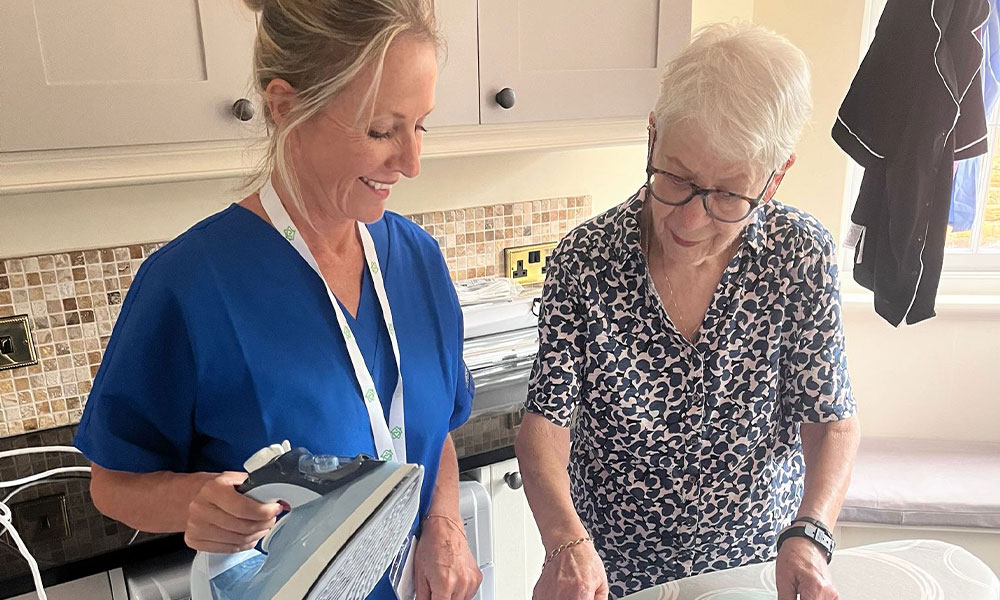
Keep familiar routines flexible
Start with the person’s usual habits, rather than creating a timetable for them. Familiar steps can give the day a recognisable shape.
- Allow enough time for getting up, dressing and meals.
- Offer one activity or task at a time.
- Keep frequently used belongings in familiar places.
If a routine is causing frustration, pause and consider a different time or approach. The aim is a more comfortable day, with room for the person’s preferences.

Give conversations time
Speak directly to the person, at a comfortable pace. Reduce distractions where possible and give them time to understand and respond.
- Use short sentences and one question at a time.
- Offer a simple choice, such as tea or coffee.
- Notice facial expressions and gestures as well as words.
Avoid turning conversations into memory tests or speaking over someone. See the NHS advice on communicating with someone with dementia for more suggestions.
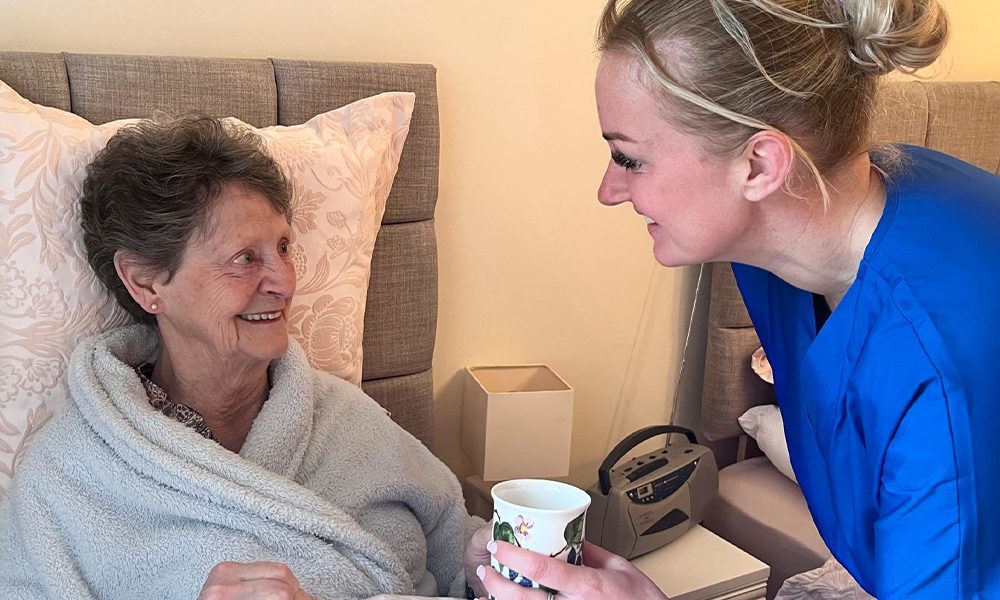
Protect privacy during personal care
Help with washing or dressing can feel very personal. Explain what you are offering, seek permission and let the person do the parts they can manage.
- Offer manageable choices about clothes and timing.
- Keep the room comfortable and protect privacy.
- Pause if the person becomes upset.
If help with personal care is regularly difficult, ask a care professional for advice. The NHS guide to looking after someone with dementia includes everyday care suggestions.

Make meals and drinks easier to enjoy
A calm setting and familiar food may make mealtimes more inviting. Allow time and offer the amount of help the person needs.
- Make drinks easy to see and offer them regularly.
- Eat together if the person enjoys company.
- Notice changes in appetite or difficulty managing food.
Contact the GP if eating or drinking becomes difficult, particularly with repeated coughing or trouble swallowing. Seek individual advice rather than changing food textures yourself.

Make space for enjoyment and connection
An activity does not have to be complicated to be worthwhile. Follow the person’s interests and adapt what you do to how they feel that day.
- Listen to favourite music or look through familiar photographs.
- Share a household task they enjoy.
- Spend time outdoors when suitable support is available.
Enjoyment and company matter more than finishing a task. The NHS ideas for activities with dementia offer further starting points.

Make the home easier to navigate
Look at the places where the person seems unsure or uncomfortable. Small, gradual changes may help without making familiar surroundings feel unfamiliar.
- Keep walking routes clear and check lighting.
- Reduce competing noise during meals or conversations.
- Consider simple labels or visual cues where useful.
Ask about an occupational therapy assessment if the home is becoming difficult to manage. The NHS guidance on a dementia-friendly home explains practical options.
When supporting someone with dementia feels difficult
Look beyond the task to what the person may be experiencing
Repeated questions, distress or reluctance to accept help can be tiring for everyone. You do not have to find the right response immediately. A pause and a calmer approach may help you understand what is getting in the way.
Responding to repeated questions or distress
Try to respond to the feeling behind the words.
Someone repeatedly asking when a relative is coming may be looking for reassurance. Answer gently, acknowledge the worry and consider whether something familiar would help them feel more settled.
Look for possible discomfort: pain, thirst, hunger, needing the toilet, tiredness or too much noise. Behaviour can communicate a need when explaining it has become difficult.
You might say, “You seem worried. Shall we sit together for a moment?” Avoid arguing about what the person should remember. If you feel frustrated, take a short pause when it is safe to do so.
Ask the GP or dementia care team about persistent or changing distress, especially if pain or illness may be involved. Alzheimer’s Society’s guidance on understanding and supporting a person with dementia explores this approach.
When someone does not want help
Start by listening to what accepting help means to them.
They may worry about privacy, cost, losing control or having someone unfamiliar in the house. Focus on one concern and ask what would make support more acceptable.
Offer a choice about the task or timing. Help with preparing lunch may feel easier to discuss than a broad conversation about “needing care”. Alzheimer’s Society’s advice on introducing support explains ways to approach this gradually.
Having dementia does not automatically mean someone cannot make decisions. Keep them involved and seek professional advice if there are concerns about their ability to make a particular decision. The NHS explanation of capacity and consent describes this principle in healthcare.
If essential needs are going unmet, contact the GP, dementia team or local adult social care service. Do not rely on persuasion alone when health or safety is at risk.
Supporting quality of life with dementia
Quality of life includes comfort, choice and things to look forward to
Care conversations can become a list of tasks. We also want to know what makes the day feel worthwhile to the person: a favourite radio programme, time with the dog, a familiar walk or choosing what to wear.
For someone who has always enjoyed gardening, a supported few minutes tending a pot by the door might be more appealing than a planned group activity. On a tired day, sitting together and looking at the flowers may be enough.
The NHS guidance on staying active with dementia encourages activities adapted to the person’s interests and abilities. Participation can take different forms; there is no need to turn it into a test.
When we discuss support with a family, these preferences belong alongside practical care needs. They help us plan time with the person, rather than focusing only on what needs doing around them.

When does someone with dementia need more support?
You can ask for advice before reaching a crisis
The right amount of help depends on the person’s needs, wishes, home and available support. Review the arrangement as circumstances change, including changes in the health or availability of family carers.
Signs the current arrangement needs reviewing
Look at what is happening across the whole day and night.
Missed meals or medicines, increasing difficulty with personal care, repeated falls or becoming lost may suggest that existing support is no longer enough. Frequent night-time needs also deserve attention.
Include the family’s experience. Regularly losing sleep, struggling to manage other responsibilities or feeling unable to leave safely are reasons to seek support, not measures of how much you care.
In England, you can ask the council’s adult social care team for a free care needs assessment. This considers everyday needs and possible support; it is separate from any assessment of who pays.
A private provider can also assess the care it could offer. Be clear about difficult days as well as good ones, and ask how changes would be reviewed. Seek medical advice for new health concerns.
Understanding the options
Support can come from more than one place.
Family, friends, community groups and dementia services may all have a role. Planned home care visits can help with agreed routines, meals or personal care, while respite care at home can provide an assessed arrangement for a family carer’s break.
Live-in care may suit some people who need more support throughout the day. A live-in carer needs breaks and overnight rest; regular waking help requires a separately assessed night-time arrangement.
A care home may be appropriate when the support someone needs cannot be provided safely and sustainably at home. Alzheimer’s Society explains how to approach care-home decisions with the person and relevant professionals.
Ask each provider what it can realistically deliver, including cover, night-time care and changing needs. The aim is an arrangement that works for this person and the people supporting them.

Dementia support shaped around the person
Talk to our team about what is working and what feels difficult
Our team includes people with specialist experience in dementia care. Through our Dementia and Alzheimer’s Home Care service, we take time to understand the person’s routines, communication, abilities and preferences, alongside the support their family can realistically provide.
We begin with an assessment and agree a care plan. Depending on the person’s needs, this may include personal care, meals, agreed medication support, companionship or time for familiar activities. We work alongside relevant health professionals where appropriate, with consent.
We consider care experience and personal compatibility when matching carers, and plan for continuity wherever possible. We also agree how to communicate with the person and their family, and how to review support when something changes.
You are welcome to contact us while you are still exploring options. We can discuss your situation, explain our assessment process and confirm whether we can provide suitable care in your area.
Preparing for a dementia care assessment
Bring the person’s wishes and your questions into the conversation
You do not need a complete care plan before asking for help. A short account of daily life, together with the person’s priorities and your main concerns, gives a professional something useful to work from.
Support for you as a family carer
Your wellbeing belongs in the care conversation too.
Be honest about sleep, work, your own health and the support you can continue providing. Asking for a break can help you work out a more manageable arrangement.
In England, an adult unpaid carer can ask their council for a free carer’s assessment. This focuses on your needs and is separate from the assessment of the person you support. Services identified afterwards are not necessarily free.
Before arranging a break, explain the person’s routines and what happens if they become unsettled or need help overnight. Agree who is responsible and how you can be contacted.
If costs are worrying you, ask about a financial assessment and possible funding routes. Alzheimer’s Society’s guide to paying for care in England explains the main starting points.
What to take to an assessment
Explain the person’s everyday life, not just their diagnosis.
Note what they enjoy, how they prefer to communicate, what they manage themselves and when help is needed. Include medication information, night-time needs and the people already involved in supporting them.
Ask how carers are matched, how changes are reviewed, what happens if a carer is absent and how costs are explained. Our guide to understanding and arranging home care takes you through the wider process.
These independent resources can help you prepare:
- Alzheimer’s Society: This is me — a way to record personal preferences, routines and important details.
- Alzheimer’s Society: Caring for a person with dementia — a broader practical guide for families and carers.
- Alzheimer’s Society: Find support near you — search by town or postcode for local groups and services, and check their suitability with the provider.
Involve the person in what you record and share, as far as possible. Their priorities may be different from the concerns that first prompted the enquiry.
Frequently asked questions about dementia care at home
Home care in your area
Looking for support at home for yourself or someone you love? Explore our home care services across Shropshire, Herefordshire and Worcestershire, or talk to our team about the support available where you live.
Not sure whether we cover your location? Contact our team to discuss care in your area.
Home care in Shropshire
Home care in Herefordshire
Home care in Worcestershire
Finding the right dementia support at home
Build on what helps today, and plan for changing needs
Supporting someone with dementia starts with understanding their day: the routines that feel familiar, the activities they enjoy and the moments when help would make a difference. Small adjustments may make daily life more manageable, while changes in personal care, meals, reassurance or night-time needs can be a reason to review the support in place. Your own wellbeing matters in that conversation too.
If you are wondering where home care could fit, tell our team what is happening. Perhaps mornings have become difficult, someone needs more company, or you need a reliable break from caring. We can talk through those concerns, explain the dementia support we can offer and assess whether it is suitable for the person’s needs and wishes.
You can contact us while you are still weighing up the options. Together, we can explore a practical next step that respects the person you care about and the support your family can realistically provide.