





When dementia makes nights difficult
Look at the person’s needs as well as their sleep
An unsettled night can take many forms. Someone may struggle to fall asleep, wake repeatedly, call for a relative or feel ready to start the day while everyone else is in bed. You may find yourself listening for every movement, unsure whether to offer help, encourage rest or ask for advice.
Dementia can affect the body’s sense of day and night, but it is not the only possible explanation for waking. Pain, discomfort, anxiety and other health problems can also matter. Alzheimer’s Society explains how dementia can affect sleep. A new difficulty deserves attention rather than an assumption that nothing can be done.
This guide helps you separate an ongoing pattern from a sudden change, notice possible needs and try a manageable routine. It also explains how to prepare for a GP conversation, discuss night-time support and make room for your own rest. The aim is a more comfortable, sustainable arrangement; no routine can promise an uninterrupted night.
Support may come from relatives, the dementia team, community services or an assessed care package. Home Care visits can help with agreed daytime or evening routines, while some households need a different overnight arrangement. Keep the person’s preferences involved, and be clear about the hours and help the family can realistically provide.
Difficult nights at a glance
- Notice when waking happens, what the person seems to need and what helps.
- Sudden new confusion needs immediate medical help: go to A&E or call 999.
- Night-time waking and sundowning can overlap, but are not the same thing.
- Try familiar daytime and bedtime routines that suit the person.
- Keep the route to the toilet clear and appropriately lit.
- Include the family carer’s sleep and health in the support plan.
- Match overnight support to actual needs, with time for the practitioner to rest.
Six everyday starting points
Choose one manageable change
These ideas can help you look at the whole day rather than concentrating only on bedtime. Start with something the person is likely to welcome. Alzheimer’s Society’s healthy sleep guidance and Dementia UK’s sleep advice explain how familiar routines, daylight and comfort may help.

Make room for daylight
A little time outside may fit naturally into an existing routine, such as sitting in the garden after breakfast.
- Choose a comfortable place and suitable weather.
- Arrange company or mobility support if needed.
- If going out is difficult, try sitting by a window in natural light.
Make it an enjoyable part of the day, rather than a task the person has to complete.
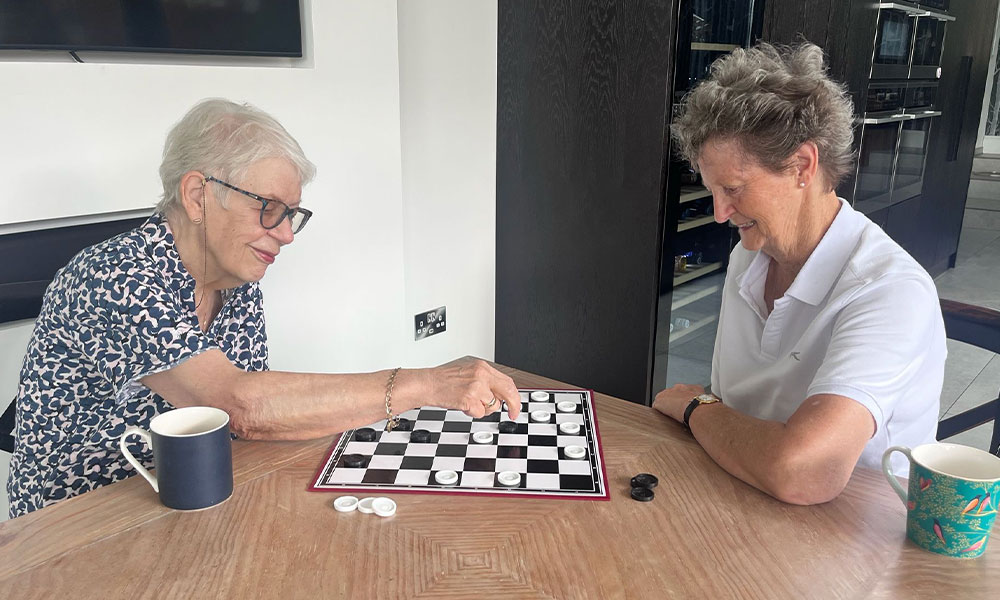
Keep familiar interests in the day
Offer something the person enjoys and can take part in at their own pace. Company and interest matter more than performance.
- Try a favourite game, music or a simple household activity.
- Choose a time when they tend to feel most comfortable.
- Allow a pause or a shorter activity when they are tired.
Discuss suitable movement with the care team where health or mobility limits what feels comfortable.

Notice food, drinks and comfort
Include meals and drinks in your notes if waking seems linked to hunger, thirst or needing the toilet.
- Offer regular opportunities to eat and drink.
- Consider caffeine-free alternatives later in the day.
- Follow any existing dietary, swallowing or fluid guidance.
Do not withhold needed drinks to avoid night-time toileting. Ask for advice if eating or drinking becomes difficult.
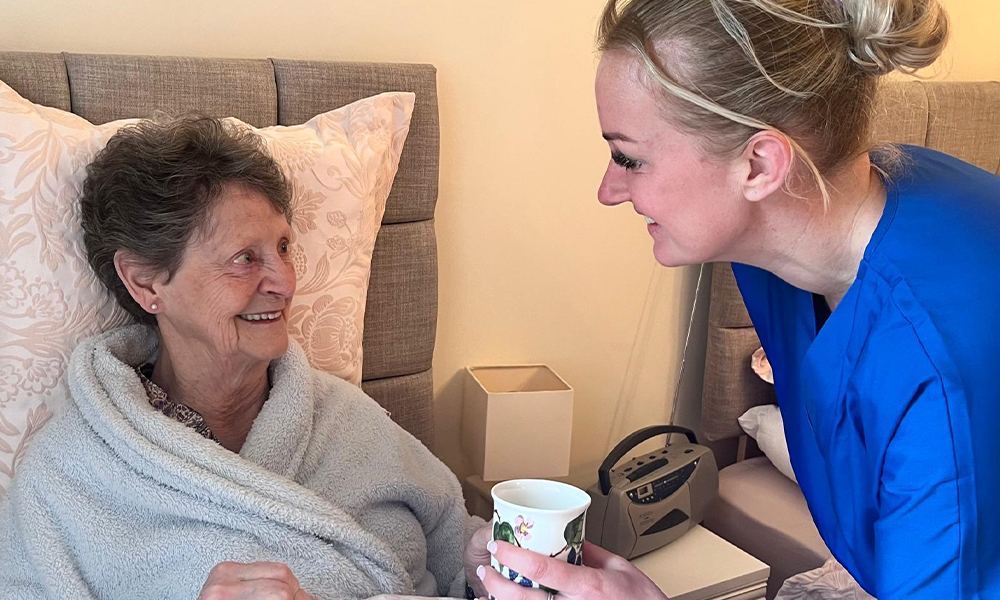
Make the evening feel familiar
A calm sequence can help the transition towards bed: washing, changing, using the toilet and a quiet activity the person likes.
- Allow enough time so support feels unhurried.
- Reduce competing noise and busy conversations.
- Keep the routine flexible around the person’s preferences.
If something causes distress, pause and reconsider that step rather than insisting on finishing the routine.

Check the small things that matter
Comfort depends on the individual. Nightwear, bedding, room temperature and personal-care needs may all affect how settled someone feels.
- Offer a choice of comfortable nightwear.
- Ask about discomfort and notice changes in how they move.
- Follow the agreed continence or personal-care plan.
Record repeated discomfort for the GP or care team; a bedroom adjustment cannot treat an underlying illness.
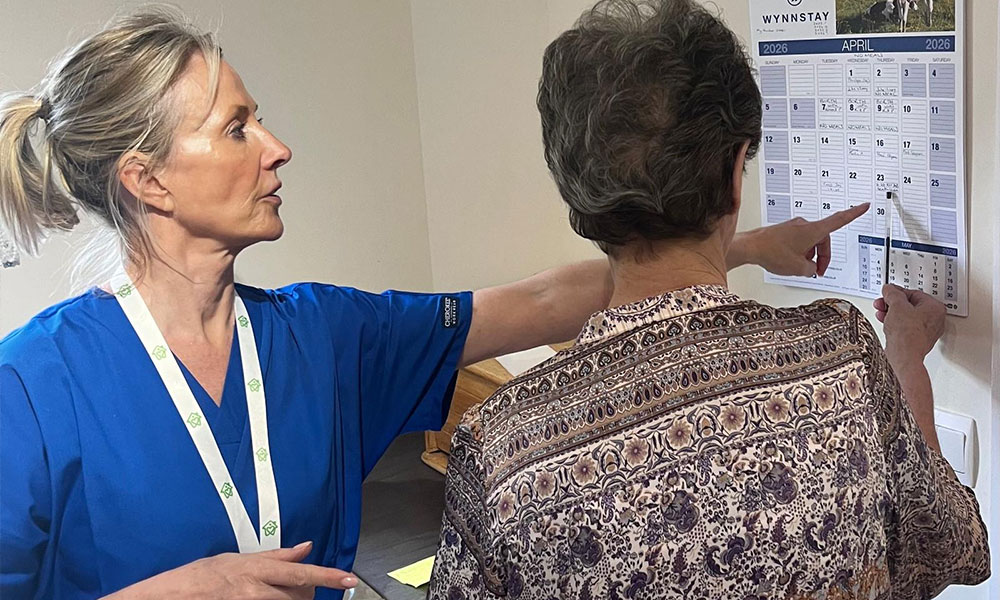
Share a simple routine
When several people help, a brief written plan can make support more consistent without making the household rigid.
- Record the usual evening sequence and preferred activities.
- Note words or approaches the person finds reassuring.
- Name who is helping and when they will arrive.
Include the person in the plan as far as possible, and make sure everyone knows where the latest version is kept.
Understand the pattern, then respond to the moment
Waking is a starting point for a question
Ask what is happening at this time, how it differs from the person’s usual experience and what might help them feel comfortable. That approach is more useful than treating every unsettled night as the same problem.
Is it sundowning?
Sundowning describes a pattern of increased distress or agitation often noticed towards the end of the day.
It may involve pacing, anxiety or repeated questions and can continue into the night. Alzheimer’s Society’s explanation of sundowning makes clear that it is not strictly tied to sunset. Waking at 2am does not, on its own, establish that sundowning is the cause.
Notice whether difficulty begins in the afternoon, while getting ready for bed or after waking from sleep. These are useful distinctions to share. Keep a note of what happened beforehand, including noise, a busy day or signs that a need has not been met.
A person may be tired, uncomfortable or uncertain about where they are. Consider whether a calmer setting, appropriate lighting or a familiar conversation helps. If a television programme appears to upset them, turning it off may be more helpful than trying to explain the programme.
Sleep patterns alone cannot tell you a person’s stage of dementia or predict what will happen next. Ask the GP or dementia team about a changing pattern, rather than using a label to explain away distress.
When the person is awake or worried
Begin with reassurance and a check of what they may need.
Approach calmly and give the person time to respond. A familiar voice and a short sentence may be easier to follow than several questions. You might say, “You seem worried. I’m here with you.” Avoid turning the conversation into a test of whether they know the time.
Offer help with an apparent need, such as finding the toilet or getting comfortable. If they want to move around, consider how you can support safer movement within the agreed care plan. Avoid arguing that they must stay in bed.
Keep the route to the bathroom clear and use enough light to see safely. Check that any usual mobility aid is accessible. If getting up or moving has become difficult, seek an assessment rather than attempting unfamiliar lifting or improvising equipment.
Afterwards, note what seemed to help and what did not. If distress keeps returning, or you cannot provide the help safely, speak to the care team about a different plan. Repeatedly trying the same response is exhausting when the underlying need remains unresolved.
Your rest belongs in the care plan
Be specific about the help you need
Being awake several times a night can make the following day difficult, even when each interruption seems brief. Tell the GP or care team how much sleep you are losing and whether it is affecting your health, work or ability to provide care. The person’s support needs and your capacity to meet them both matter.
Try to turn an offer of help into a clear arrangement. Instead of “Let me know if you need anything”, ask whether a relative can take responsibility for a defined period, prepare a meal or handle an appointment. Agree what they are comfortable doing and what they will do if they need help.
For example, a partner might be losing sleep while also managing every breakfast and morning wash. An agreed morning visit could allow a period of rest once the visitor takes over. If frequent assistance is still needed during the night, discuss that separately; morning help would not cover those needs.
In England, a free carer’s assessment can consider how caring affects your life and what support might help. Tell the assessor about nights as well as daytime tasks. If your health is suffering, speak to your own GP too; help for the person with dementia should not depend on you becoming unwell.

When to ask for professional help
Different concerns need different responses
A sudden change, an ongoing sleep difficulty and a care arrangement that has become unsustainable each need attention. Explain which concern you have, how it differs from usual and what support is already in place.
Ask about health changes and persistent difficulties
If someone suddenly becomes confused, go to A&E or call 999.
This applies even when the person already has dementia. Follow the NHS advice on sudden confusion: stay with them, offer reassurance and use simple language while waiting for help. Do not assume the change is an ordinary unsettled night or wait to see whether a new bedtime routine helps.
For ongoing sleep problems, contact the GP, nurse or dementia team when the pattern is distressing, affecting wellbeing or becoming difficult to manage. Describe pain, toileting changes, unusual movements during sleep or snoring and gasping if you have noticed them.
The clinician can consider other causes and whether further assessment is needed. Alzheimer’s Society describes sleep problems that may need medical assessment. Bring the diary and an up-to-date medicine list, including non-prescription products.
Ask a GP or pharmacist if medicine could be contributing. Do not change doses or timing, or add sleeping tablets or supplements, without professional advice. A care worker can report observations and follow an agreed plan; prescribing and treatment decisions belong to the appropriate healthcare professional.
Match night support to what happens overnight
Describe the assistance needed before choosing a care arrangement.
Explain how often the person wakes, how long help usually takes and whether someone needs to remain awake. Include reassurance, toileting, mobility and any assessed care tasks. A short evening visit and someone staying overnight serve different purposes.
Sleeping-night support means the practitioner is expected to sleep and can provide occasional agreed assistance. Waking-night support means a practitioner stays awake and on duty. Repeated or prolonged needs require a review of the arrangement.
CM Bespoke Care’s Live-in Care page explains these options. A standard live-in arrangement includes breaks and overnight rest. Continuous day-and-night cover requires an agreed rota or shifts, rather than one person being available without rest.
Ask how cover, handovers, changes in need and emergencies will be managed. Get the agreed hours, tasks and costs in writing. A diagnosis alone does not determine the package; suitability depends on the person, the home and the support required. The dementia team or council can help you consider other settings if the necessary support cannot be provided safely at home.

How CM Bespoke Care can help with difficult nights
Care planned around the person and the household
We are the CM Bespoke Care team, supporting people living with dementia and their families at home. Our Dementia and Alzheimer’s Home Care starts with understanding the person’s routines, communication, preferences and care needs. Tell us which parts of the evening or night are difficult, and what the family is currently managing.
An assessment can explore visiting support, Respite Care at Home or an appropriate overnight or live-in arrangement. We consider the home, required skills, practitioner availability and professional guidance before agreeing support. The care plan should explain both the help provided and the arrangements for rest and handover.
We can help with agreed practical care and familiar routines, record meaningful changes and pass concerns through the appropriate route. Clinical assessment and treatment remain with the healthcare professionals. If nights have changed since care began, contact the team so the arrangement can be reviewed.
Bring the whole night into the conversation
Explain needs, support and what has changed
A daytime appointment may not show what the household is managing overnight. Take a few examples, involve the person as they wish and make the next action clear before the conversation ends.
Ask about assessment and help with costs
Describe night-time needs separately from the question of who pays.
In England, anyone can ask the council for a free care needs assessment. Explain the help required overnight and what happens when it is unavailable. A needs assessment considers support; any financial assessment considers a possible contribution towards costs.
Be clear about what relatives can and cannot continue doing. If the council already knows the person, ask how to request a review when needs or family circumstances change. You can also ask for a separate carer’s assessment for your own situation.
Attendance Allowance may be relevant for someone at State Pension age who needs personal care or supervision because of a health condition. The usual eligibility rules include having needed help for at least six months, with special rules in some circumstances. Read the current GOV.UK eligibility guidance and get benefits advice about the actual needs, including those at night.
A dementia diagnosis does not automatically make all care free or establish benefit entitlement. Our guide to paying for home care explains the wider funding routes. Keep this discussion alongside the immediate support plan, so practical help is not lost among forms and financial questions.
Leave with a plan you can use
Agree who will do what, and how the plan will be reviewed.
Write down the next step, who is responsible and when you will follow up. If you are trying a routine change, record it clearly so relatives and care workers can understand what has been agreed. Keep any healthcare instructions with the current care plan.
Include a contingency for the usual family carer being ill or unavailable. Check whom to contact about care arrangements and distinguish that contact from the route for medical help. Keep the information somewhere the person and those supporting them can find it.
For independent advice, use Alzheimer’s Society’s healthy sleep guidance and its explanation of sundowning. Dementia UK’s sleep information also links to its specialist Admiral Nurse support for families who want to discuss dementia-related concerns.
Review whether the person feels more comfortable and whether the family is getting the intended rest. A plan may need adjusting even when everyone has followed it. Report a new health concern through the appropriate medical route instead of waiting for a scheduled care review.
Frequently asked questions about dementia and sleep
Home care in your area
Looking for support at home for yourself or someone you love? Explore our home care services across Shropshire, Herefordshire and Worcestershire, or talk to our team about the support available where you live.
Not sure whether we cover your location? Contact our team to discuss care in your area.
Home care in Shropshire
Home care in Worcestershire
Home care in Herefordshire
Related Articles

Supporting someone with dementia at home: a practical family guide
Supporting someone with dementia can bring questions about daily routines, changing needs and when to ask for help. Explore practical ways to make life at home more manageable, understand the care options available and prepare for a conversation about support.
Live-in care or a care home? A family decision guide
Choosing between live-in care and a care home means looking beyond the weekly price. Explore how each option could fit someone’s routines, relationships and support needs, with practical questions about overnight care, funding and the arrangements that make everyday life work.

Person-centred home care: care plans, dignity and working together
Person-centred home care starts with the person and the life they want to lead. This guide explains how care plans can turn wishes into practical support, protect dignity and choice, and help families, carers and healthcare professionals work together when needs change.

Making a home dementia-friendly: practical changes that support independence
Explore practical ways to make a familiar home easier to use when someone is living with dementia. Learn how lighting, clear routes, useful signs and everyday arrangements may help, and when to ask for an assessment before buying equipment or making bigger changes.
Talk through the nights you are managing
Start with what is happening at home
The most useful starting point is often one recent night: when the person woke, what they seemed to need, how you responded and how much rest you both had. Those details can help you explain an ongoing difficulty to the GP or care team and identify which part of the support arrangement needs attention.
If the current routine depends on one relative being available every night, consider what would make it sustainable. An evening visit, a planned period of respite or assessed overnight support may serve different needs. Keep the person’s wishes and the family’s health in that discussion, alongside practical questions about the home, handovers and costs.
When you contact CM Bespoke Care, tell us where support is needed, the usual daytime and night-time routine, the help already in place and any important changes or professional guidance. We can discuss suitable care options and whether a home assessment would help you plan the next step.